


Dental restorations at ZAK in Berlin-Mitte
Dental restorations should not only replace missing tooth structure, but also be functionally stable, aesthetically appropriate, and easy to maintain in the long term. At ZAK, we plan crowns, bridges, inlays, veneers, temporary restorations, and implant-supported restorations digitally and individually.
By combining modern diagnostics, digital impressions, and our in-house CAD/CAM lab, all steps remain within our practice. This allows treatment, planning, fabrication, and fitting to be closely coordinated.
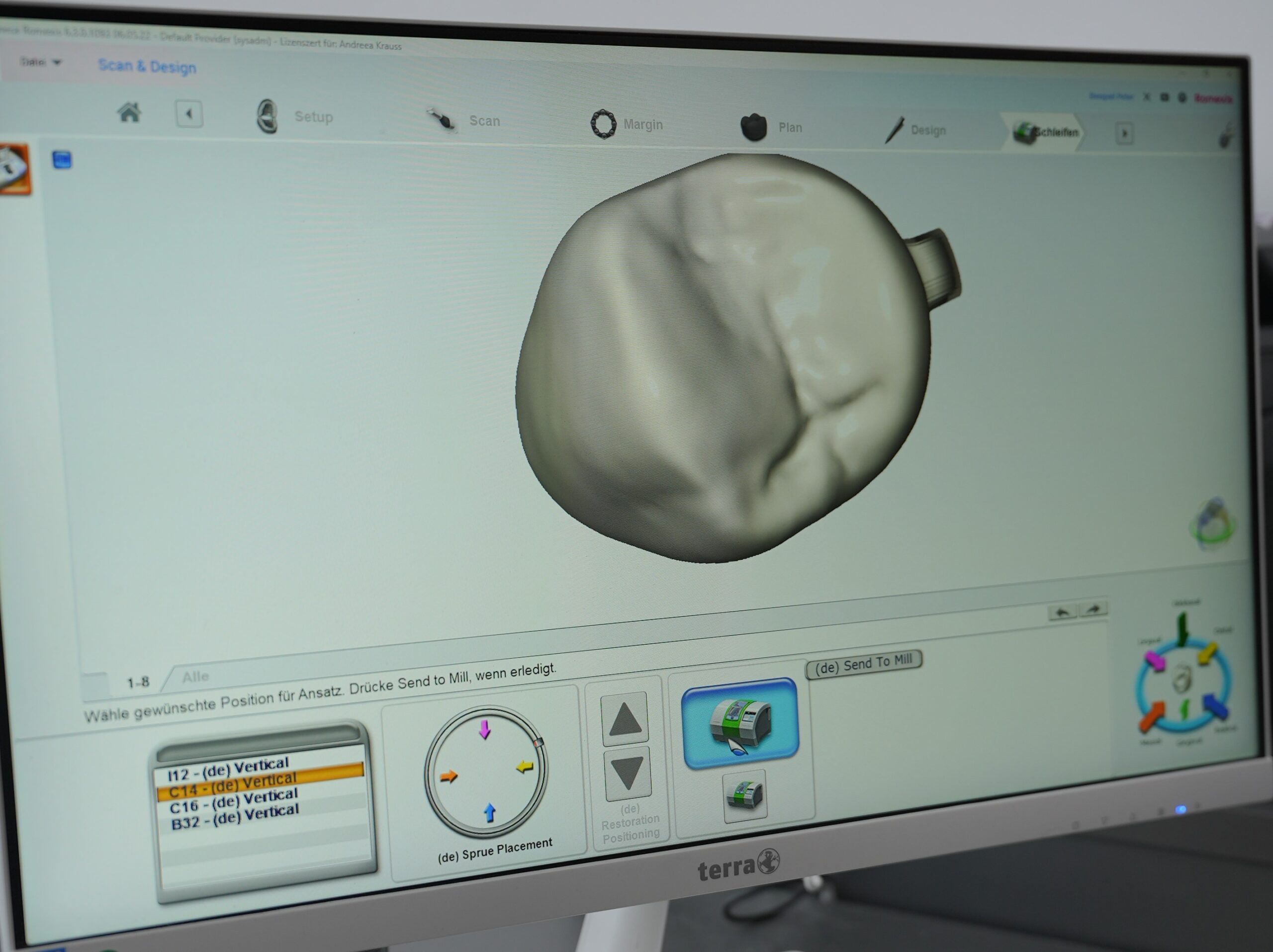
Dental restorations start with precise planning
Before every restoration, we carefully assess which solution is medically appropriate and how as much healthy tooth structure as possible can be preserved. The key is which restoration will be stable in the long term, functionally appropriate, and gentle on the teeth. We look not only at the individual tooth, but at the overall situation: existing tooth structure, gums, root, adjacent teeth, opposing jaw, bite, aesthetics, cleanability, and everyday load.
Material selection is also an important part of planning. Ceramic, zirconia, glass-ceramic, or other materials are not chosen as a one-size-fits-all solution, but tailored to the patient’s medical situation.
Digital impressions and CAD/CAM fabrication
At ZAK, dental restorations are planned and produced digitally. Instead of many traditional intermediate steps, intraoral scans, digital design, and CAD/CAM fabrication can be directly integrated.
Digital impressions
Using an intraoral scanner, we capture the dental situation precisely and without conventional impression material. The data can be used immediately for planning, design, and further coordination.
Central CAD design
Crowns, bridges, inlays, onlays, veneers, temporary restorations, and implant-supported restorations are designed digitally. Shape, contact points, bite, material thickness, and aesthetics are taken into account.
Fabrication in our in-house lab
Many restorations can be fabricated directly in our in-house CAD/CAM lab. This keeps planning, fabrication, fitting, and quality control closely connected.
Short distances, better coordination
The clinician, dental assistants, and lab work closely together. If shade, shape, or bite need to be adjusted, coordination can take place directly in the practice.
Precision and control
Digital workflows do not replace dental oversight; they support it. Every restoration is checked, adjusted, and only placed once function, fit, and aesthetics are correct.
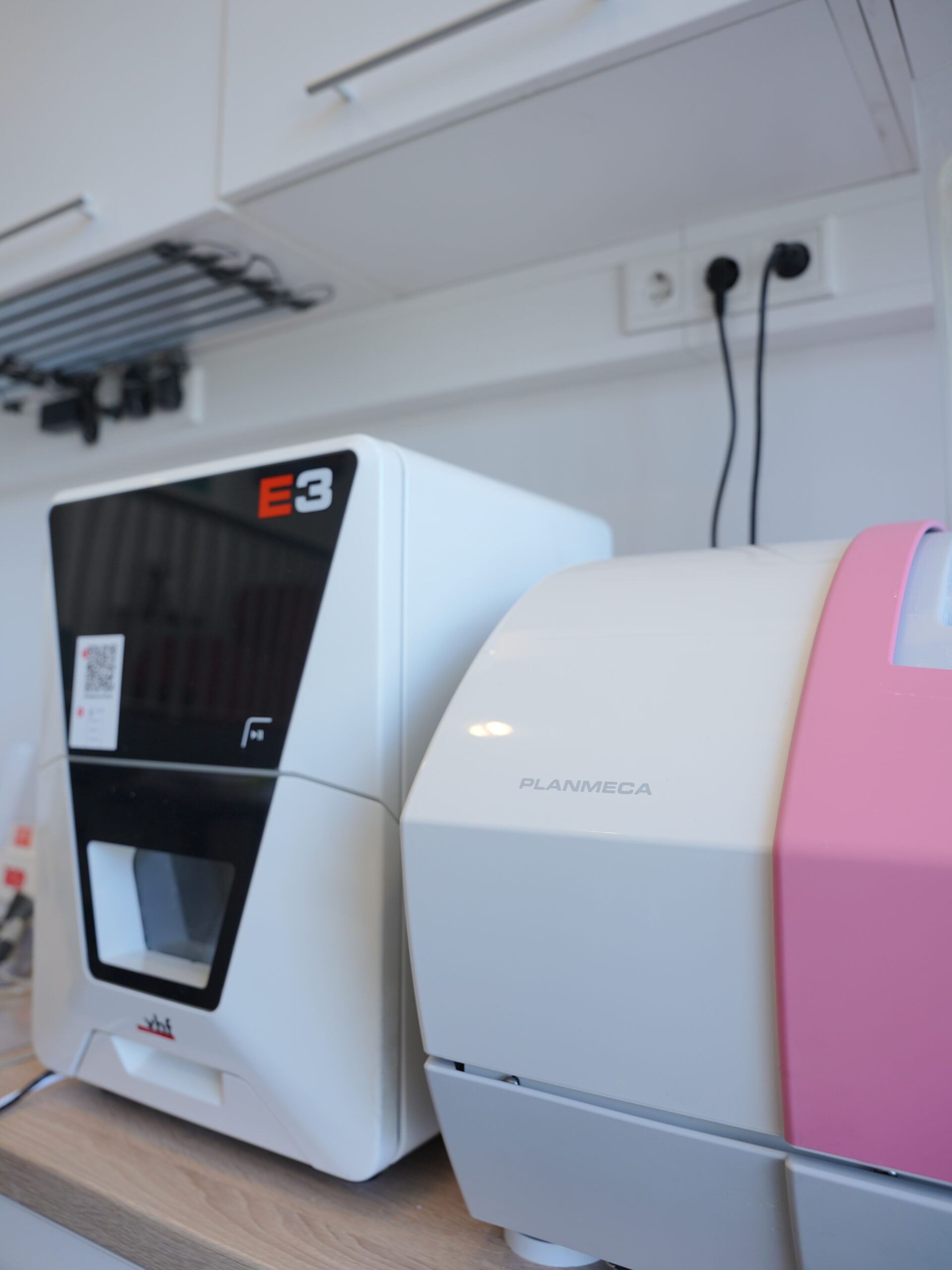
In-house dental lab for precise results
Our in-house CAD/CAM dental lab enables particularly close coordination between treatment, planning, and fabrication. Digital impressions, CAD design, fabrication, and dental oversight work seamlessly together.
For patients, this means dental restorations can be planned and produced faster, more individually, and more precisely. Shade, shape, bite, contact points, material, and aesthetics are tailored directly to your personal situation.
Depending on findings, material, and scheduling, certain crowns, temporary restorations, splints, or smaller restorations can be produced at very short notice—under certain conditions even overnight or on the same day.
The advantage is not only speed. Because the lab and clinical team work directly together, fit, function, and aesthetics can be checked immediately and fine-tuned. This results in restorations that do not look standardized, but are individually matched to each patient.
Digital lab technology for precise dental restorations
In ZAK’s in-house dental lab, we combine digital planning with modern fabrication technology. This allows many steps to be carried out and controlled directly in the practice—from digital design to the finished restoration.
Central CAD design
Dental restorations are planned and designed digitally. Shape, material thickness, contact points, bite, aesthetics, and later cleanability are taken into account.
In-practice CAM fabrication
With several CAM milling machines, crowns, bridges, inlays, onlays, temporary restorations, splints, and other restorations can be fabricated directly in the practice and, depending on the findings, made from ceramic, zirconia, PMMA, or other dental materials.
3D printing and digital workflows
3D printing and digital model production are also part of the lab workflow. This allows planning, control, and fabrication to be closely integrated.
Finishing and quality control
After digital fabrication, finishing, sintering, glaze firing, polishing, and quality control follow. Fit, surface, shade, shape, and bite are checked before the restoration is placed.
The benefit for patients
In-house lab technology makes dental restorations available faster, individually adjustable, and easier to control.
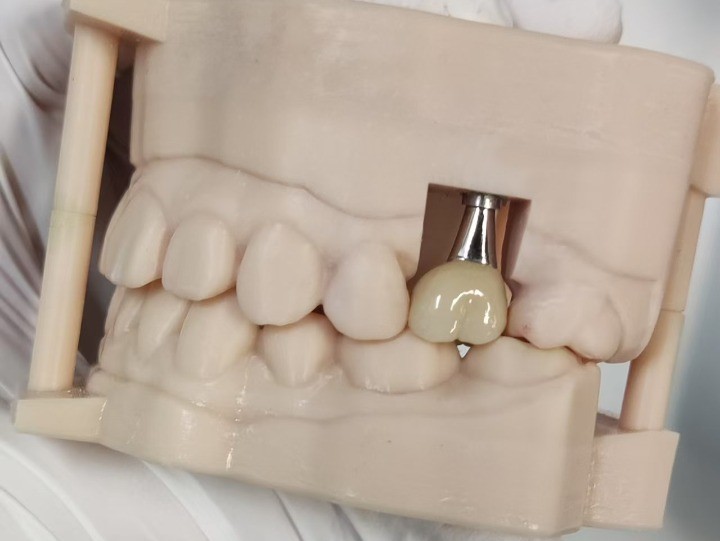
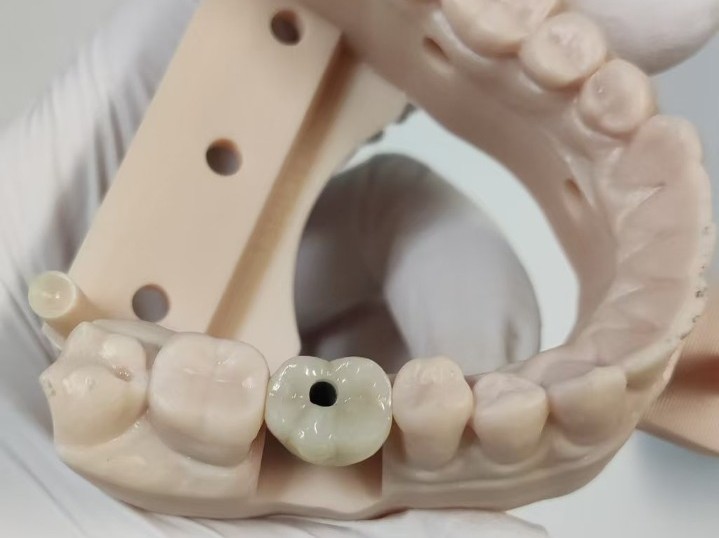
The right restoration for every finding
A dental restoration is not always the same as another. Which restoration makes sense depends on how much healthy tooth structure can be preserved, how heavily the tooth is loaded, what aesthetic wishes exist, and what long-term stability is to be achieved.
Inlays, onlays, and partial crowns
If sufficient tooth structure remains, inlays, onlays, or partial crowns can be a tooth-conserving alternative to a full crown. The goal is to preserve as much healthy tooth structure as possible while providing stable restoration of the tooth.
Crowns
If a tooth is more severely damaged, heavily filled, or weakened after root canal treatment, a crown may be necessary. It stabilizes the tooth and restores shape, function, and aesthetics.
Bridges
If one or more teeth are missing, bridges can provide a fixed restoration. Load, bite, adjacent teeth, aesthetics, and cleanability are planned carefully.
Implant-supported restorations
If implants are present or planned, the restoration is considered from the outset. A crown, bridge, or larger implant-supported restoration should be functionally stable, easy to clean, and aesthetically appropriate.
Veneers
Veneers can be used when improvements are needed primarily in shape, shade, or minor aesthetic corrections in the front teeth. The restoration is planned particularly carefully so that the result looks natural and as much healthy tooth structure as possible is preserved.
Material selection for function and aesthetics
Choosing the right material is an important part of every restoration plan. Not every material is suitable for every situation. Key factors are the findings, load, existing tooth structure, bite, aesthetic requirements, and whether the restoration is on natural teeth or on implants. At ZAK, we work exclusively with high-quality, certified dental materials intended for the respective medical indication. Biocompatibility, stability, durability, precision of fit, and aesthetics play a central role.
Lithium disilicate glass-ceramic
Lithium disilicate glass-ceramic is often used for restorations with high aesthetic demands, for example inlays, partial crowns, crowns, or veneers. The material combines a natural light effect with good strength and is particularly suitable when tooth shade, translucency, and a harmonious appearance are important.
Zirconia
Zirconia is a high-strength ceramic restoration solution and is used primarily where exceptional strength and load-bearing capacity are required. It is suitable, for example, for crowns, bridges, and implant-supported restorations.
PMMA and CAD/CAM polymers
PMMA and other CAD/CAM polymers are used primarily for temporary restorations, long-term temporaries, splints, or certain planning steps.
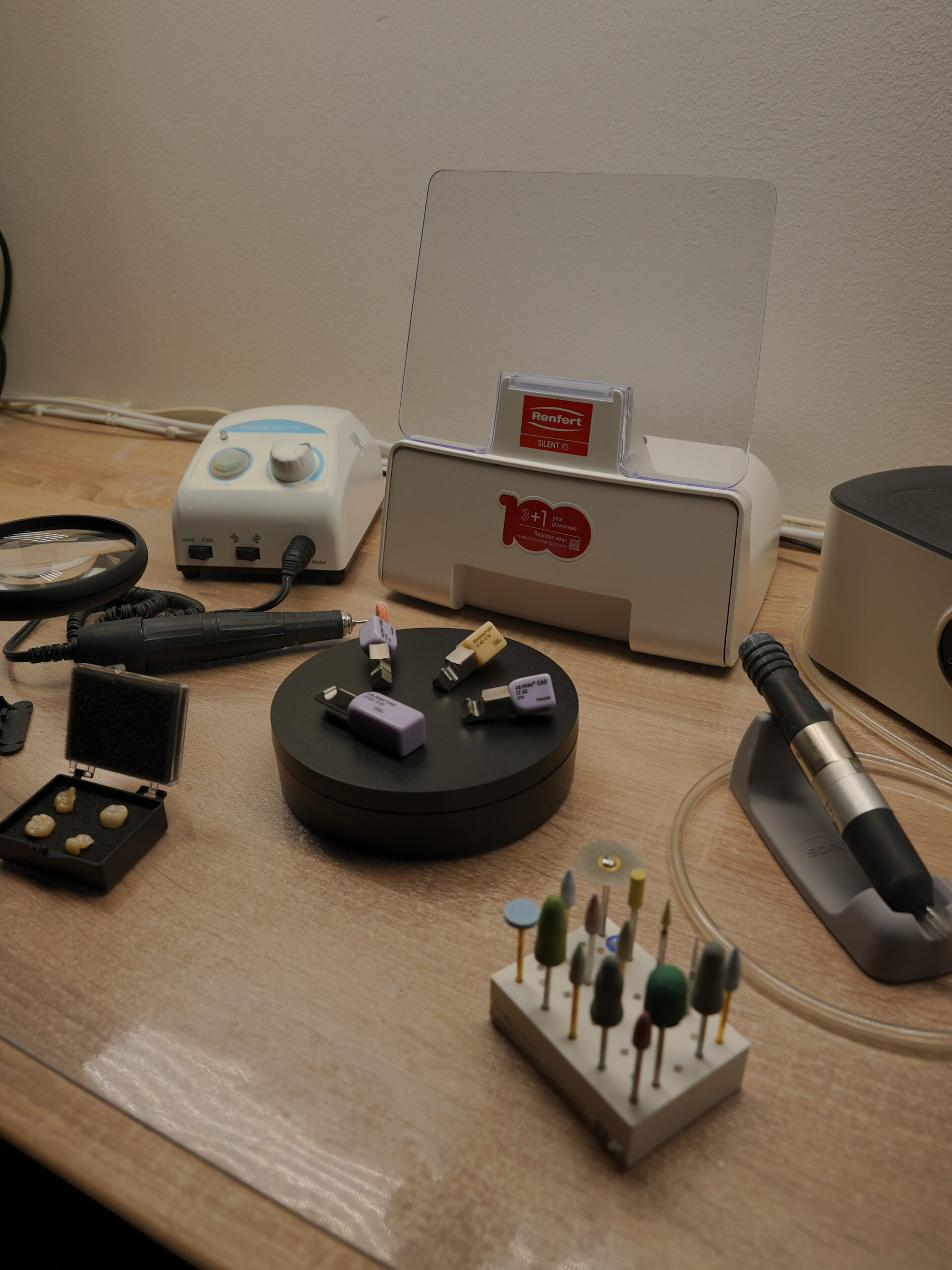
Splints, temporary restorations, and digital adjunct restorations
Dental restorations do not end with crowns and bridges. In many cases, additional restorations are important to protect teeth, the temporomandibular joint, musculature, or a later definitive restoration.
Splints
Custom splints can be useful for grinding, clenching, high load, or to protect existing restorations. They are planned digitally and fabricated to match the individual bite situation.
Temporary restorations
Temporary restorations protect prepared teeth, maintain aesthetics and function during the treatment phase, and help prepare for the later definitive restoration.
Digital fabrication
Using intraoral scanning, CAD design, 3D printing, milling, and thermoforming, splints, temporary restorations, and other auxiliary restorations can be integrated directly into the digital practice and lab workflow.
Aligner therapy
If tooth positions are to be improved before an aesthetic or prosthetic restoration, aligner therapy can also be part of the overall plan.
Dental Prosthetics