Direct coordination
The dentist and laboratory can discuss shade, shape and bite directly with each other.
Our own laboratory in Berlin-Mitte
From the digital impression to the finished restoration: our practice laboratory combines modern dental technology with direct coordination at the dental chair.
Tooth shade, shape and bite are discussed and checked where your restoration is made. Clinical care and laboratory work take place under one roof.
From scan to restoration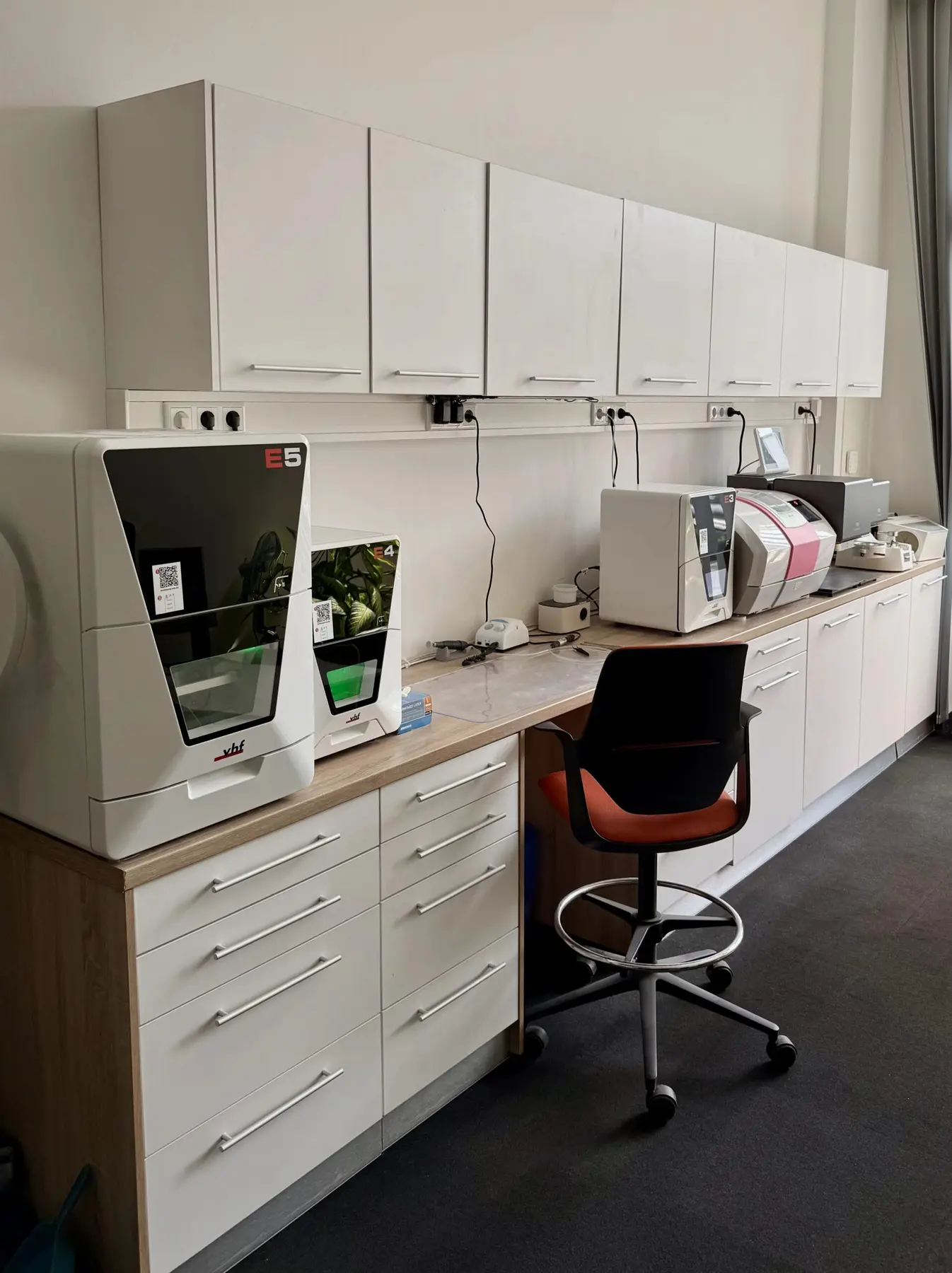
The dentist and laboratory can discuss shade, shape and bite directly with each other.
Try-ins, questions and adjustments can be coordinated at the practice.
Digital precision is followed by careful finishing and clinical checks.
How your restoration is made
Digital data connects the individual steps. Personal assessment and clinical checks remain part of every stage.
An intraoral scanner records your teeth directly at the dental chair. Each of our five treatment rooms has its own scanner.
Using CAD – computer-aided design – we plan tooth shape, contact points, material thickness and bite.
The design guides production. Milling machines shape the selected material, while 3D printing is used, for example, to make dental models.
Depending on the material, the next steps include sintering or ceramic firing, individual characterisation and polishing.
We check the fit, shade, contact points and bite in your mouth and coordinate any necessary adjustments directly with the laboratory.
Made in our laboratory
We choose the restoration and material according to your clinical findings, the expected load and your wishes.
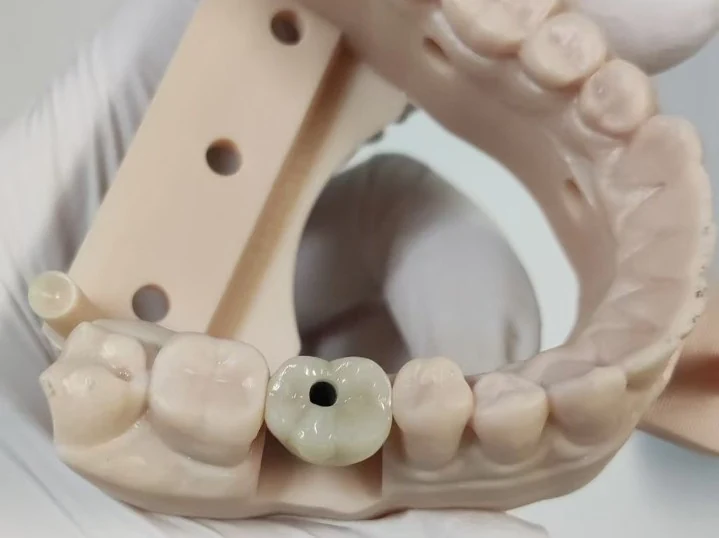
Digitally designed and individually finished. For implant restorations, function, appearance and future cleaning are considered from the start.
Explore dental restorations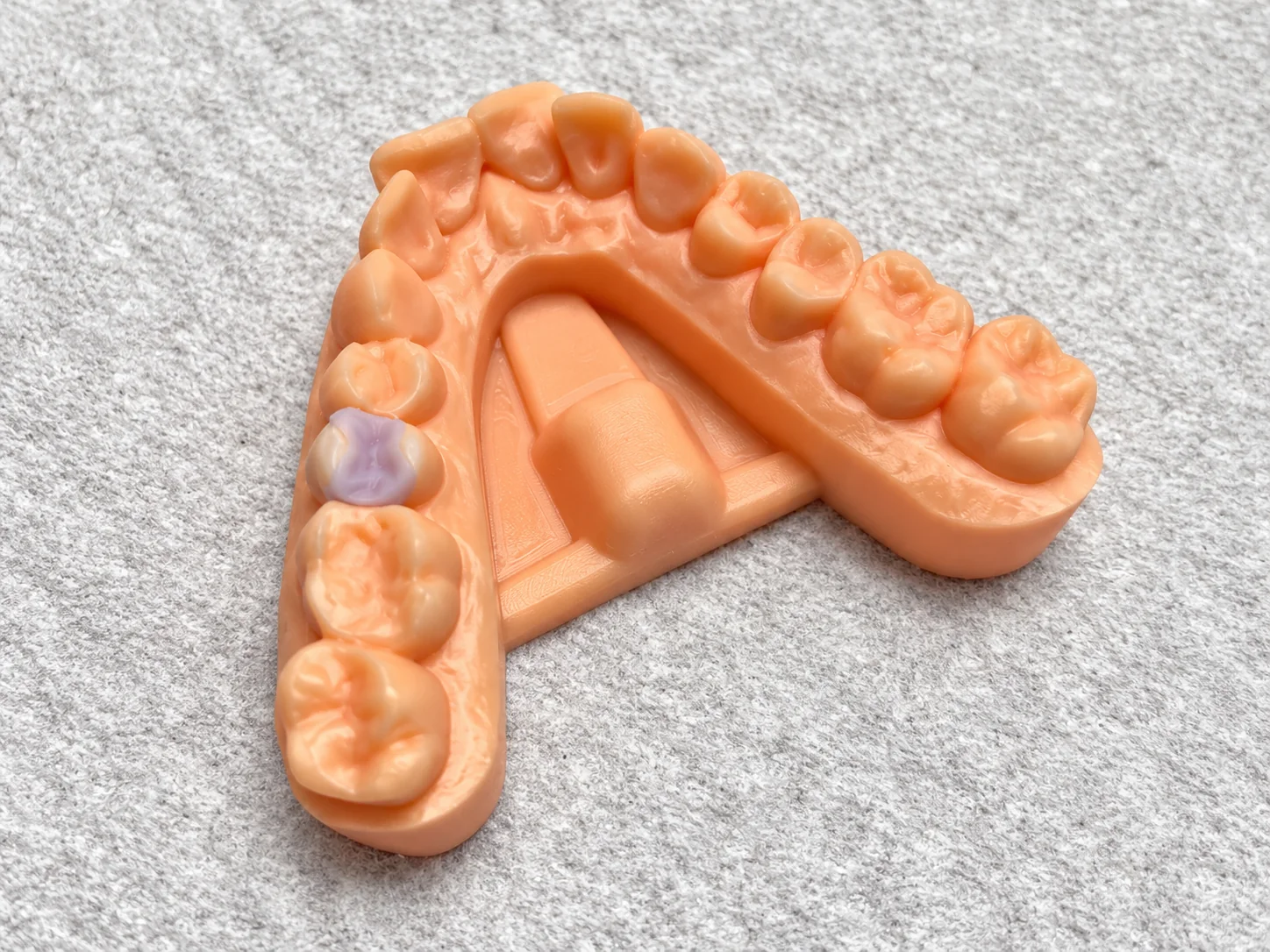
Small restorations deserve the same care. Tooth shape, transitions and surfaces are coordinated with your existing teeth.
Aesthetic restorations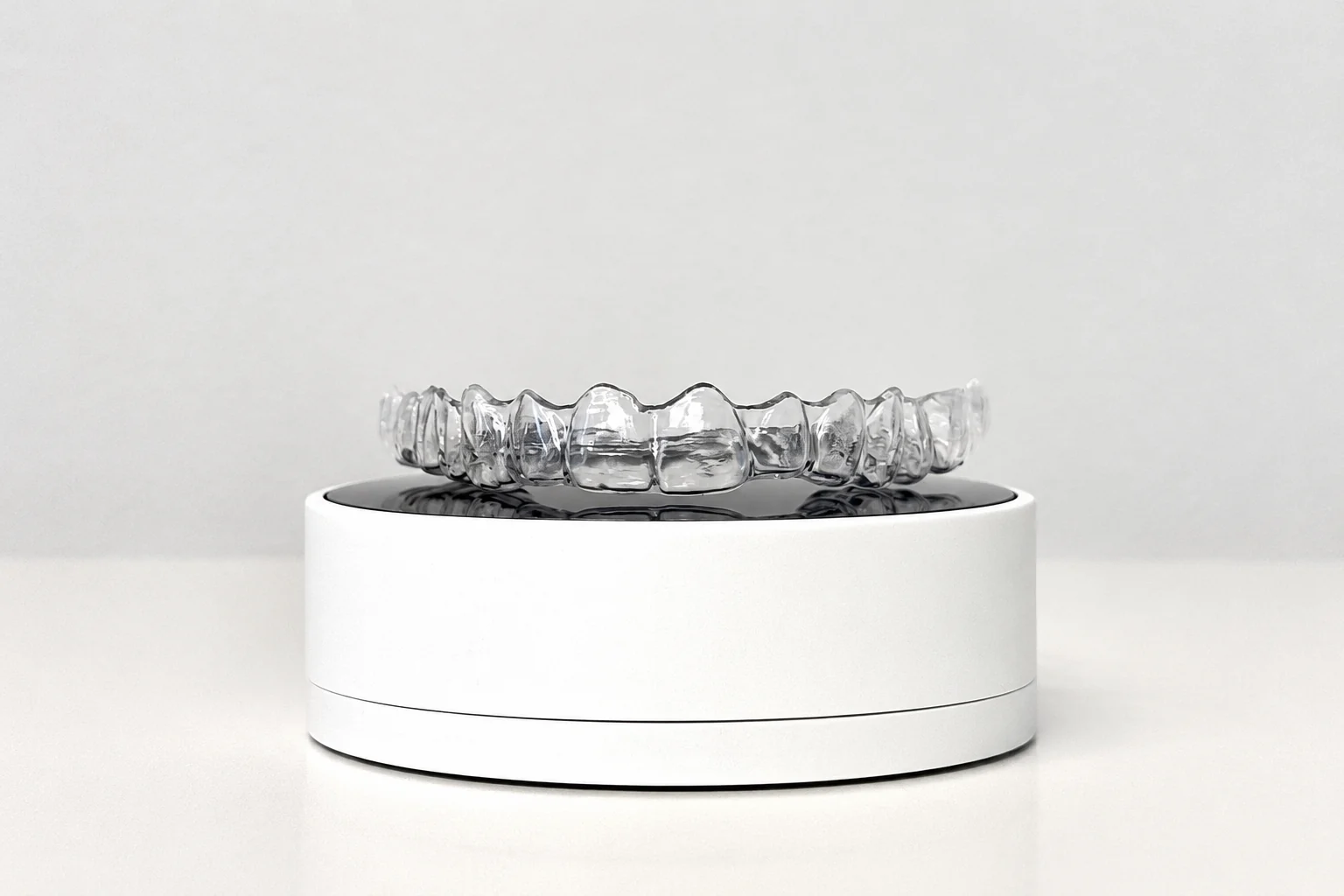
Temporary restorations support the treatment phase. Individual splints and printed models complement digital planning and production.
Explore splint therapyAnother look inside production
Digital planning, 3D-printed dental models and thermoforming work together in our laboratory. The thermoformed splint is then machined along the planned contour.
The film shows this machining step on a dental model. Edges and surfaces are then finished. When the splint is fitted, we check its fit and function in your mouth.
The right type of appliance depends on the treatment goal – for example, protection against grinding or planned tooth movement with aligners.
Inside our laboratory
Several milling systems, 3D printing, ceramic furnaces and thermoforming allow us to produce restorations at the practice. We select the material and process for the individual restoration.
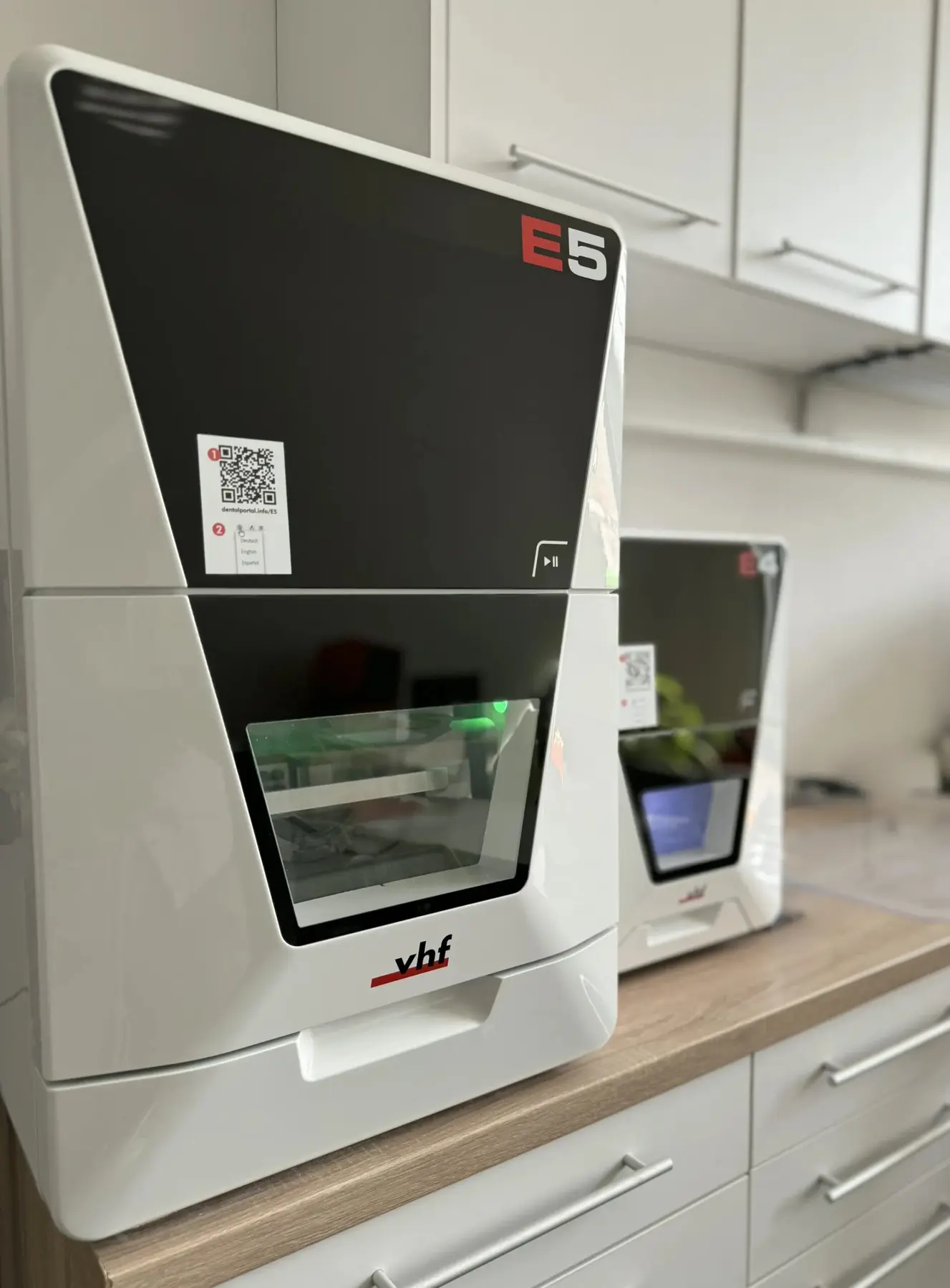
Different systems work with materials including zirconia, glass ceramics and dental polymers.
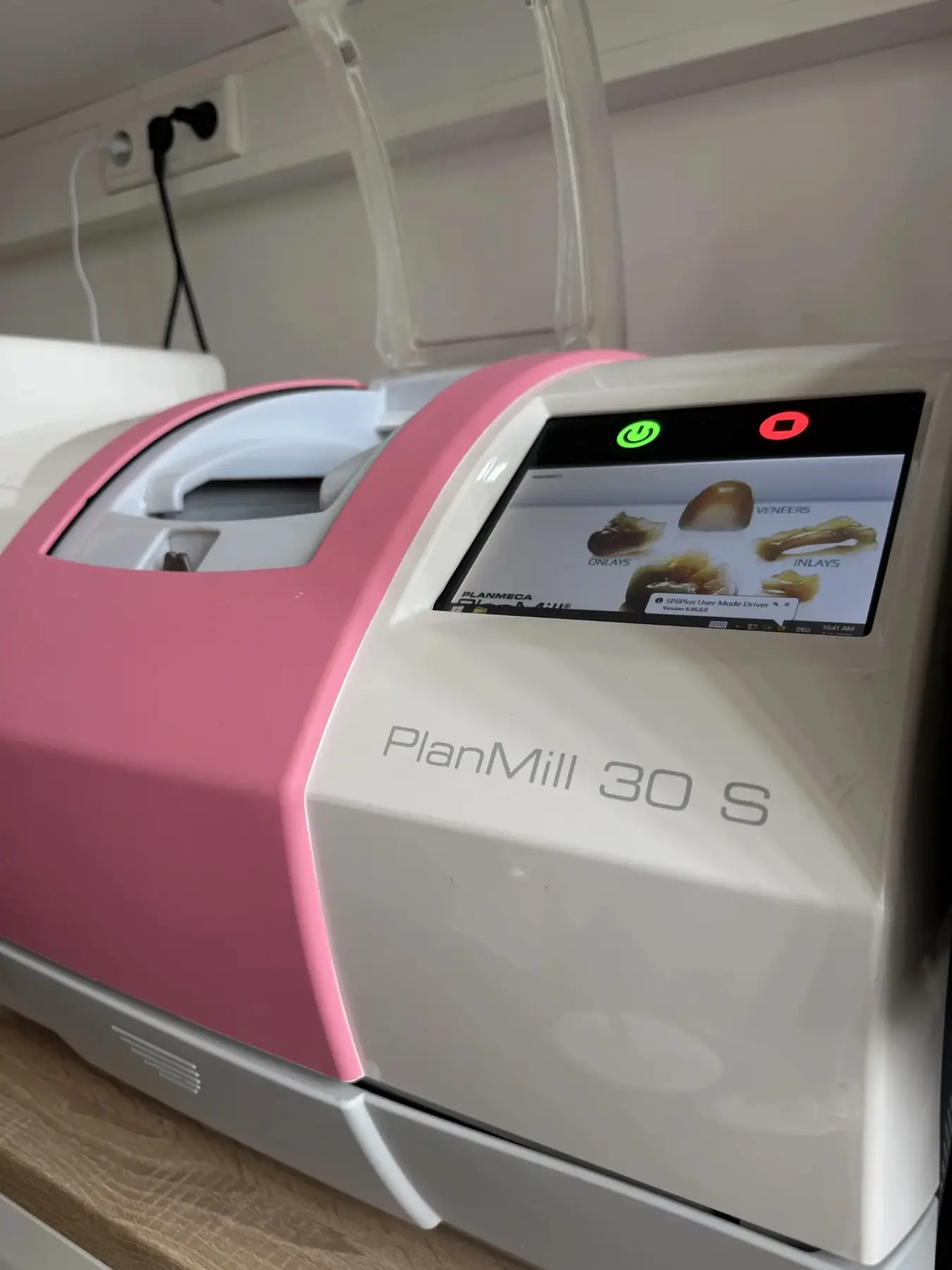
The PlanMill complements our production of suitable restorations from dental blocks.
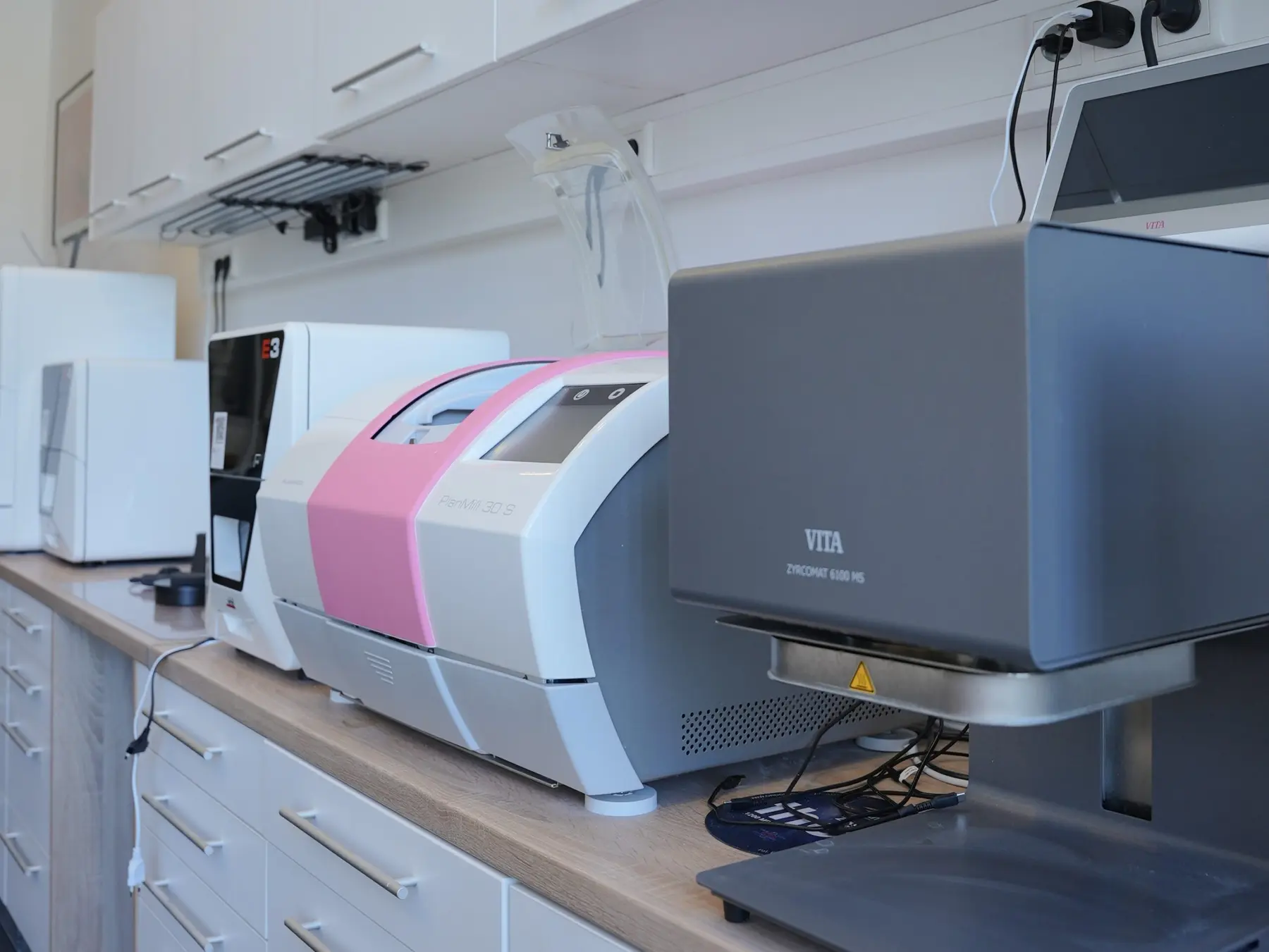
Ceramic furnaces, polishing and manual finishing give the restoration its finished surface and individual appearance.
Questions about our laboratory
The dentist and laboratory can communicate directly. Shade, shape, fit and bite can be assessed on site and adjustments coordinated immediately. This keeps clinical care and production closely connected.
Suitable restorations can be produced within 24 to 48 hours. Your personal schedule depends on the findings, material, extent of treatment and necessary try-ins. We discuss it with you before treatment.
We work with materials including zirconia, glass ceramics and dental polymers, for example for temporary restorations or splints. Selection depends on the application, loading, available space and desired appearance.
No. Depending on the material, further steps include sintering, ceramic firing, characterisation or polishing. The restoration and its function are then checked clinically at the try-in.
Everything works together
The laboratory is part of your treatment pathway. From planning to follow-up, we work with the same clinical information and coordinate the next steps together.
Discover our treatment approachPersonal consultation
We discuss the findings, your wishes and possible next steps clearly and without time pressure.
Our patient portal is in German. Contact us for help in English.