Bruxism & splint therapy
Many people clench or grind their teeth without consciously realizing it. This often happens at night, but sometimes also during the day in stressful or concentrated situations. The consequences can vary greatly: worn teeth, sensitive tooth necks, tension, temporomandibular joint discomfort, headaches, or damage to fillings, crowns, and dental restorations.
At ZAK, we view bruxism not just as "grinding," but as a functional problem that can affect teeth, muscles, temporomandibular joints, bite, and existing restorations. Therefore, we carefully examine the available indicators and determine which protective or treatment options are appropriate.
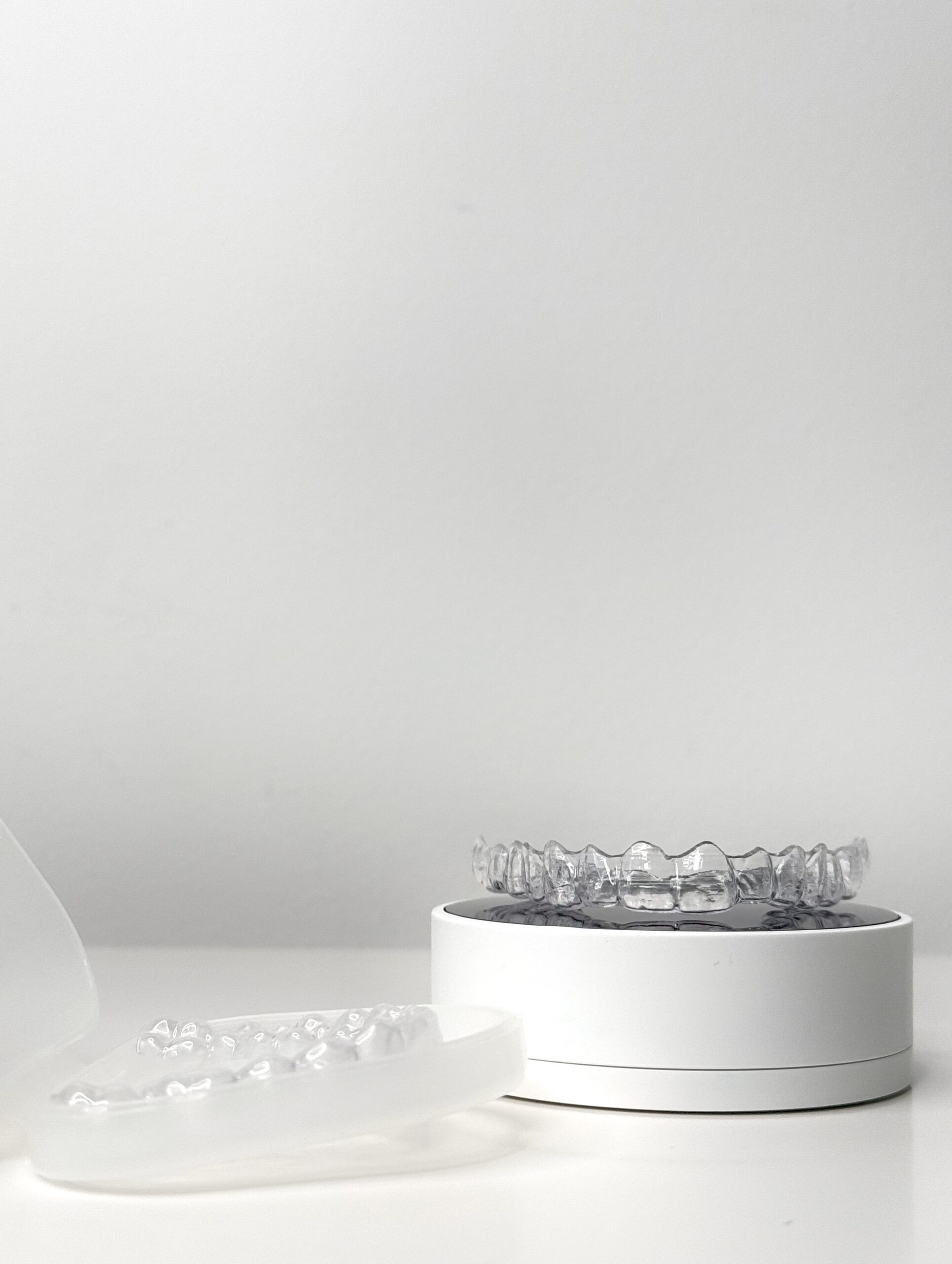
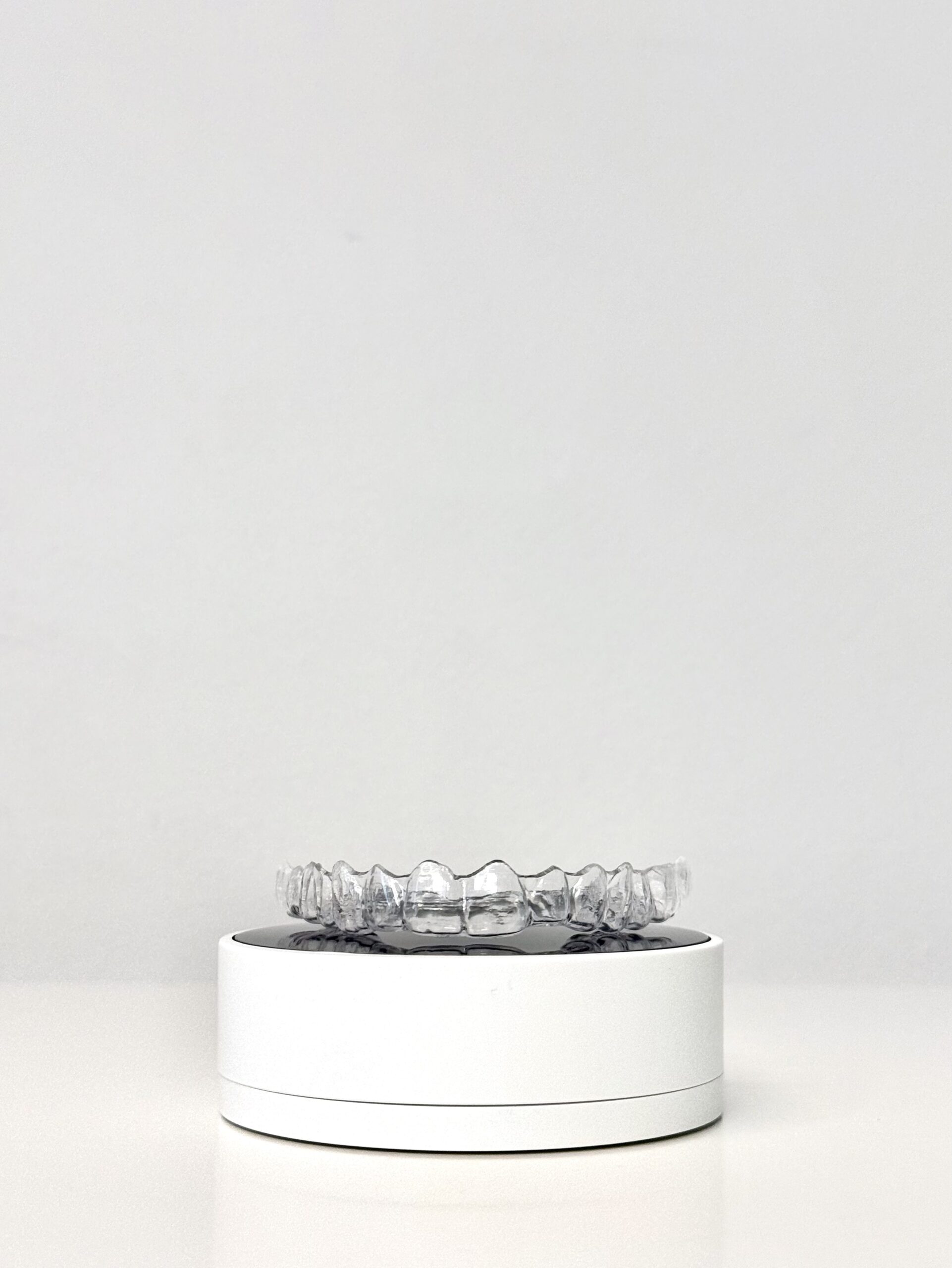
A custom-made splint can help protect teeth and dental restorations from further overload. Depending on the situation, it can also help relieve muscles and temporomandibular joints. It is crucial that the splint is not standardized, but rather planned and monitored to suit the individual bite situation.
Our goal is to detect damage early, protect teeth and restorations, and specifically address discomfort related to grinding, clenching, or jaw strain.
How to recognize bruxism?
Bruxism often goes unnoticed for a long time. Many patients only discover significant signs of grinding or clenching during a dental check-up.
Worn tooth surfaces
Typical signs include flattened chewing surfaces, small enamel cracks, sensitive teeth, or visible signs of abrasion. Fillings, ceramic inlays, crowns, or veneers can also be damaged more quickly by heavy stress.
Tense masticatory muscles
Clenching and grinding don't just affect the teeth. Masticatory muscles, facial muscles, and the neck can also be affected. Some patients notice a feeling of pressure in the morning, jaw muscle soreness, or tension headaches.
Temporomandibular joint discomfort
If the bite or muscle tension is permanently overloaded, the temporomandibular joints can also react. Clicking, rubbing, restricted mouth opening, or pain in the temporomandibular joint area should be clarified by a dentist.
Damage to dental restorations
Bruxism can put greater stress on existing restorations. Crowns, bridges, implant restorations, fillings, or ceramic restorations should therefore be checked regularly if there are signs of clenching or grinding.
Stress and everyday life
Bruxism can be related to stress, tension, sleep, concentration, or certain habits. Therefore, it is important not only to look at the teeth but also to discuss the everyday situation and possible triggers.
The earlier signs of bruxism are recognized, the better teeth, temporomandibular joints, muscles, and existing dental restorations can be protected.
- In-house laboratory production
- Digital impression with intraoral scan
- Individual planning
- Various materials
- Grinding and bite splints
- Retainer splints
- Sports mouthguards
- Direct control of fit, bite, and wearing comfort in the practice
Individual splint therapy
A splint for bruxism is not an off-the-shelf standard splint. It must match the individual bite situation, tooth position, stress, and existing restorations. Therefore, before production, we check which teeth are stressed, how the bite is guided, and whether damage to tooth substance, fillings, crowns, or dental restorations is already visible.
Protection for teeth and dental restorations
A custom-made splint can help protect teeth, fillings, ceramic restorations, crowns, bridges, or implant restorations from further overload. Especially with severe clenching or grinding, it can prevent existing damage from worsening.
The splint does not completely eliminate the stress, but distributes it more controllably and creates a protective layer between the upper and lower jaw.
Relief for muscles and temporomandibular joint
Bruxism doesn't just affect the teeth. Masticatory muscles, temporomandibular joints, neck, and head can also react to constant tension. A properly planned splint can help stabilize the bite situation and reduce overload.
Whether discomfort such as pressure, tension, or temporomandibular joint problems can be improved depends on the individual situation. Therefore, we regularly check the effectiveness and fit of the splint.
Digital impression and precise manufacturing
At ZAK, the dental situation can be digitally recorded with an intraoral scanner. This creates precise data on which the splint can be planned and manufactured.
The combination of digital workflow and in-house laboratory ensures that scanning, planning, manufacturing, and control are closely linked. This is important because a splint only functions effectively if it fits precisely, can be worn comfortably, and matches the bite situation.
Adjustment and control
After manufacturing, the splint is inserted, checked, and adjusted. We control the fit, contact points, wearing comfort, and bite. Patients also receive instructions on when and how the splint should be worn.
A check-up is also advisable after an acclimatization period. The splint can change due to stress, and teeth, muscles, or discomfort should also continue to be monitored.
Splint as part of a comprehensive concept
A splint protects, but does not replace the analysis of causes. Therefore, for bruxism, we also consider stress, sleep, daily life, bite situation, dental restorations, muscle tension, and possible functional connections.
Splints from our in-house laboratory
Many splints at ZAK are manufactured in our in-house laboratory. This allows for direct integration of digital impression, planning, material selection, manufacturing, adjustment, and control.
Depending on the application, different materials and material thicknesses are considered. Not every splint needs to be constructed in the same way: some splints should be particularly stable, others rather thin, comfortable, more elastic, or suitable for a specific situation. Therefore, we select the material, thickness, and design to match the individual stress and intended use.
For bruxism and clenching, the primary focus is usually the protection of teeth, dental restorations, muscles, and temporomandibular joints. Other applications may include retention after aligner therapy, protection of existing restorations, sports mouthguards, or specific therapeutic questions.
The advantage of our in-house laboratory lies in direct coordination: if the fit, bite, material thickness, or wearing comfort needs to be adjusted, the splint can be checked and modified directly in the practice. This ensures that it is not a standard splint, but a restoration that suits the patient's tooth position, bite, stress, and daily life.
Injection treatment for severe masticatory muscle activity
In cases of severe clenching, grinding, or highly tense masticatory muscles, an injection treatment with botulinum toxin may also be discussed in certain situations. This specifically reduces the activity of overloaded masticatory muscles.
This treatment is not automatically suitable for every case of bruxism. It can be beneficial if there is significant muscular overactivity, pain, tension, masseter hypertrophy, or discomfort related to craniomandibular dysfunction, and other measures alone are insufficient. It is important to classify correctly: an injection treatment does not replace careful diagnostics or mechanical protection by a splint. While the splint protects teeth, fillings, ceramic restorations, crowns, implants, and dental prosthetics, the injection treatment primarily targets overactive muscles.
Before such a treatment, we carefully examine the individual situation: masticatory muscles, temporomandibular joints, bite, tooth substance, existing restorations, complaints, pre-existing conditions, and previous therapies.