


Treatment for anxious patients
Fear of the dentist is not unusual. Many patients have had bad experiences, feel ashamed of their dental situation, or worry about pain, loss of control, or unpleasant treatments.
At ZAK, we take these fears seriously. Our goal is calm, clear and respectful care—without pressure, without blame and without rushed treatment. The first step is often not the treatment itself, but a conversation, a careful examination and an honest assessment of the options.
Especially with more extensive treatments, implantology, dentures, periodontitis or long-term avoidance of treatment, good planning is important. We explain each step clearly, discuss alternatives and plan the process so that patients know what to expect.
Depending on the situation, treatments can be planned under local anaesthetic, with additional calming measures, sedation or general anaesthesia. For general anaesthesia, we work with an experienced anaesthesia team.
The first appointment: calm, clear and without pressure
For many patients with dental anxiety, the first appointment is the most important step. That is why, at ZAK, the focus is initially on the conversation. We want to understand what experiences you have had, what you are particularly worried about, and which treatment steps you find difficult.
Talk first, then decide
At the first appointment, treatment does not have to start immediately. Often, the initial aim is to build trust, carefully assess the current situation and discuss together what options are available.
No blame
Many people with dental anxiety avoid appointments for a long time. This can make dental problems worse—and at the same time the barrier to going back to a practice increases. At ZAK, we approach this situation without blame. What matters is not why you have not been in for a long time, but how we can help sensibly now.
Clear explanation
We explain findings, X-rays and treatment options calmly and clearly. Patients should know what is necessary, what can wait, and which steps are particularly important.
Step-by-step planning
Especially when there is a greater need for treatment, not everything has to happen at once. We plan treatment in sensible stages: first acute complaints, then stabilisation, followed by long-term care and follow-up.
Staying in control
An important part of treatment is the feeling of staying in control. That is why we discuss breaks, hand signals, anaesthesia, treatment duration and possible forms of sedation or general anaesthesia in advance.
- Conversation before treatment First, we clarify what fears exist and what experiences have been made.
- Local anaesthetic Many treatments can be carried out under local anaesthetic. During treatment, breaks and hand signals are possible at any time.
- Calming medication
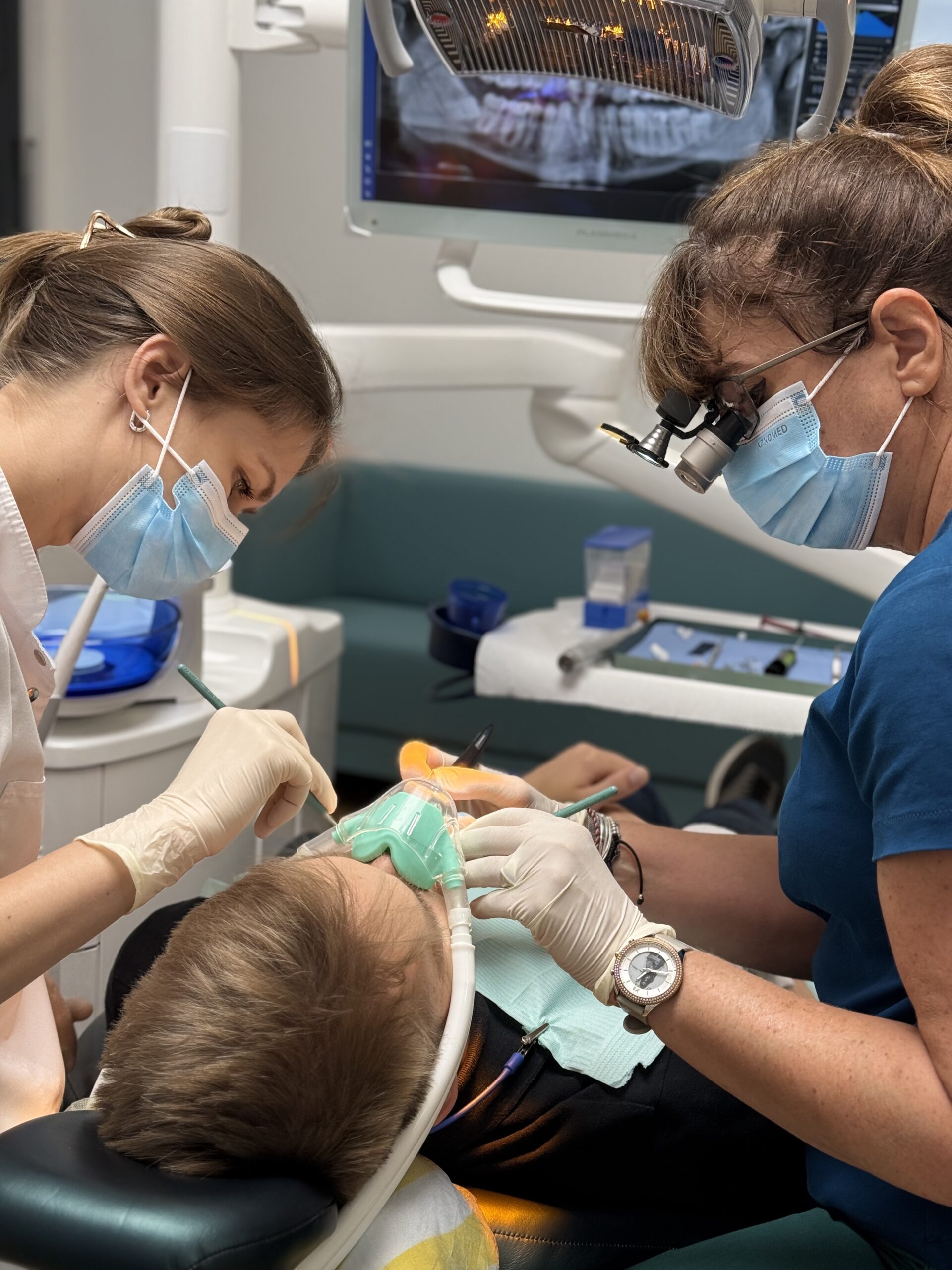
- Nitrous oxide helps reduce tension, feelings of anxiety or gag reflex during treatment.
- For stronger anxiety or longer treatments, sedation may be appropriate.
- General anaesthesia with an experienced anaesthesia team For pronounced dental anxiety, extensive procedures or surgical treatments, general anaesthesia can be planned.
Treatment with calming measures, nitrous oxide, sedation or general anaesthesia
Many patients with dental anxiety are particularly concerned about pain, loss of control or an unpleasant treatment situation. That is why, at ZAK, we discuss early on which form of anaesthesia, calming measures or anaesthesia is suitable for the planned treatment and your personal situation.
Not every anxiety-related treatment requires general anaesthesia. Often, a good explanation, reliable local anaesthetic, a slow approach or additional calming measures are sufficient. In other cases, nitrous oxide, sedation or general anaesthesia may be appropriate. The best option is decided individually.
Local anaesthetic
Many dental treatments can be carried out under local anaesthetic. The area to be treated is numbed specifically so that treatment can be as comfortable and controlled as possible.
We explain in advance what will be done, how long the treatment is likely to take, and what you can pay attention to. During treatment, breaks and hand signals are possible at any time.
Calming tablets
If you feel very tense internally, calming or anti-anxiety medication may be an option to help you manage the appointment better. Whether such medication is suitable depends on the treatment, medical history, possible interactions and your personal situation.
Important: calming medication is not used casually or as a blanket measure. It must be discussed carefully, dosed and prepared. Depending on the medication, it may be necessary not to drive yourself and to arrange an accompanying person. The KZBV describes calming and anti-anxiety medication as a possible additional aid for very anxious patients.
Nitrous oxide
For mild to moderate dental anxiety, nitrous oxide can be a good way to experience treatment more relaxed. The effect usually begins during use and wears off again once the supply is stopped.
Patients remain responsive during treatment and can communicate with the treatment team. Nitrous oxide does not automatically replace local anaesthetic, but it can help reduce tension, gag reflex or feelings of anxiety.
Sedation
For stronger anxiety, longer treatments or more extensive procedures, sedation may be appropriate. The aim is a significantly calmer treatment situation in which stress, tension and strain are reduced.
Which form of sedation is suitable is discussed individually. We take into account medical history, medication, pre-existing conditions, the scope of treatment and your personal need for safety.
General anaesthesia
For pronounced dental anxiety, extensive surgical procedures, implantology, larger dentures, or when treatment cannot reasonably be carried out otherwise, general anaesthesia may be planned.
For general anaesthesia, we work with an experienced anaesthesia team. Preparation is carried out carefully and includes medical history, medication, pre-existing conditions, fasting, the procedure, the recovery phase and care after treatment. The German Dental Association (Bundeszahnärztekammer) emphasises that the decision for general anaesthesia should be made jointly by the dentist and the anaesthetist, and that alternatives such as anxiolysis as well as minimal or moderate sedation should be considered beforehand.
Well supported after treatment
After treatment under sedation or general anaesthesia, patients initially remain in the practice until the recovery phase has been safely supervised and medically assessed. Discharge only takes place once the condition is stable and aftercare has been arranged.
Afterwards, you do not go home alone, but with an accompanying person. If needed, there is also a way to contact the anaesthesia team for urgent questions after the procedure, even outside practice hours.
Safety and clear preparation
Especially for patients with dental anxiety, good preparation is important. We discuss in advance which treatment steps are necessary, which form of anaesthetic or calming measures makes sense, and how the process will be organised.
This creates a treatment plan that is not only medically appropriate, but also takes your personal need for safety into account.
Step by step back to dental health
For patients with dental anxiety, it is especially important not to overwhelm you with treatment. If there has been no dental care for a long time, several problems may exist at the same time. Even so, not everything has to be treated immediately and all at once.
At ZAK, we plan treatments in sensible stages. First, we focus on relieving acute complaints, controlling inflammation and creating a stable starting point. Then further steps such as tooth preservation, prophylaxis, periodontitis therapy, dentures or implantology can be planned.
Acute complaints first
If there is pain, inflammation or severe complaints, these are assessed and treated first. The aim is to calm the situation and regain control over oral health.
Clarity instead of overwhelm
Many patients with dental anxiety do not know exactly how extensive the need for treatment is. That is why we first create a clear overview: Which teeth are worth preserving? Where is urgent action needed? What can wait? What alternatives are there?
Small steps, clear plan
Treatment can be divided into smaller, manageable steps. This makes the process easier to understand and plan. Patients know what will happen at the next appointment and why this step makes sense.
Stabilisation before major restorative work
Before extensive dentures, implants or aesthetic restorations are planned, inflammation, caries, gum problems or unstable teeth must be treated first. A stable foundation is important so that later restorations work reliably in the long term.
Building trust
Especially with dental anxiety, every well-supported appointment is an important step. Our goal is to build trust and structure treatment so that patients do not feel helpless.
Personal plan
Depending on the initial situation, we discuss suitable check-up intervals, prophylaxis, tooth preservation, dentures or further treatment steps. The plan should be realistic and fit your personal situation. Long-term care at ZAK means: not only treating, but building trust and creating stability.
Long-term care after treatment
Especially for patients with dental anxiety, the time after the first treatment is particularly important. Once acute complaints have been treated, care should not stop. The aim is to rebuild trust step by step and stabilise dental health in the long term.
Regular check-ups
After completing treatment, we recommend regular check-ups. This allows new problems to be detected early—before pain, greater damage or renewed fear of extensive procedures develops.
Prophylaxis for stabilisation
Professional teeth cleaning and individual prophylaxis help keep teeth, gums, dentures and implants healthy in the long term. Especially after a longer break in treatment, prophylaxis can be an important step to regain confidence and routine.
Small appointments instead of major procedures
Many larger treatments arise because problems go unnoticed for a long time or appointments are avoided out of fear. With regular smaller appointments, many situations can be treated earlier and more gently.
Maintaining trust
Our goal is not only to carry out a single treatment, but to support patients in the long term. Every calm, well-explained and respectful appointment can help reduce dental anxiety step by step.
Afraid of the dentist? We will support you step by step.
Do you have dental anxiety, have had bad experiences, or have not kept an appointment for a long time? At ZAK, we take your situation seriously. We advise you calmly, explain clearly and plan treatment so that you feel well prepared.
Whether it is an initial consultation appointment, a careful examination, treatment in stages, nitrous oxide, sedation or general anaesthesia—together we will find a path that is medically appropriate and fits your personal situation.