


Aesthetic Dentistry at ZAK in Berlin
At ZAK, aesthetic dentistry does not mean creating an artificial, standardised smile. Our goal is a natural, harmonious result that suits your face, tooth shape, tooth colour, bite and personal preferences.
This includes bleaching, veneers, aesthetic corrections, tooth jewellery and, if required, aligner therapy. Careful planning is always essential: What should be changed, what should be preserved, and which solution makes medical sense?
We provide clear advice, explain options and limitations, and plan aesthetic treatments so that function, oral health and a natural appearance work together.
Step-by-step planning
Depending on the initial situation, bleaching, veneers, composite build-ups, aligner therapy or dental restorations may be appropriate.
A natural smile instead of standard aesthetics
Aesthetic dentistry does not start with treatment, but with a thorough analysis. Not every smile should look the same. What matters is what suits your face, lips, tooth shape, tooth colour, age, personality and bite.
At ZAK, we plan aesthetic treatments so that the result looks harmonious and your natural appearance is preserved. Small changes in colour, shape, position or proportions can often make a big difference—without the result looking artificial.
Personalised consultation
We discuss what bothers you, what you would like, and which changes are realistic and medically appropriate.
Function remains important
Aesthetics must not come at the expense of oral health. Bite, tooth structure, gums, material selection and cleanability are always taken into account.
Professional in-office bleaching
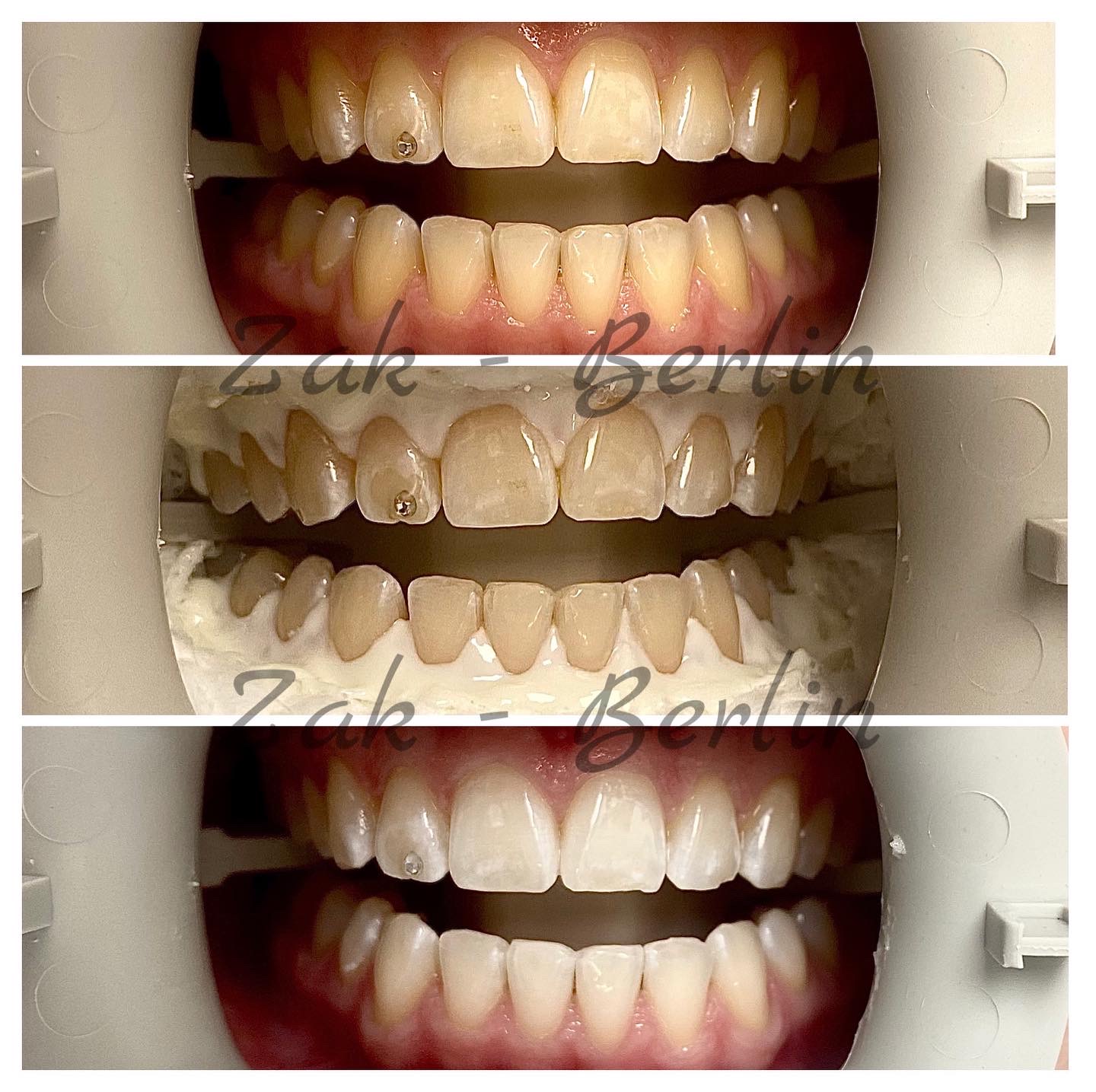
A brighter smile can look fresher, more well cared for and more harmonious. What matters is that tooth whitening is not done “just somehow”, but is dentist-supervised and planned to suit your individual dental situation.
With in-office bleaching, tooth whitening is carried out directly at the dental practice. This means that teeth, gums, existing fillings, crowns, veneers, sensitive areas and potential risks are assessed in advance. Only then do we decide whether bleaching is appropriate and what result can realistically be expected.
Dentist-supervised whitening
Before bleaching, we check for tooth decay, leaking fillings, gum inflammation, exposed tooth necks or pronounced sensitivity. Such factors can affect whether whitening is advisable immediately or whether pre-treatment should be carried out first.
Protection of gums and sensitive areas
During in-office bleaching, the gums and soft tissue are protected. The whitening gel is applied specifically to the natural tooth surfaces and monitored throughout the treatment. This makes the application far more controllable than over-the-counter products or unsupervised at-home treatments.
Faster visible results
A major advantage of in-office bleaching is that the whitening takes place directly in the practice and the result is often visible after just one session. This is particularly suitable when patients want a controlled, professional and time-saving solution.
Important for fillings, crowns and veneers
Bleaching only affects natural tooth structure. Fillings, crowns, bridges or veneers do not lighten. That is why we check in advance whether existing restorations are in the visible area and whether adjustments may be necessary or advisable after whitening.
Professional preparation
For an even result, a clean starting point is important. In many cases, a professional dental cleaning before bleaching is advisable so that deposits and external stains are removed and the actual tooth colour can be assessed more accurately.
Aftercare and what to do after bleaching
After bleaching, we explain what to pay attention to in the first few days. Coffee, tea, red wine, nicotine and strongly staining foods can affect the result. Temporary sensitivity may also occur and will be discussed individually.
Why bleaching belongs in the dental practice
In the European Union, tooth whitening with effective concentrations is clearly regulated for patient protection. Over-the-counter products may contain or release only very small amounts of hydrogen peroxide. Products with more than 0.1% up to a maximum of 6% hydrogen peroxide may only be supplied to dentists; the first application of a treatment cycle must be carried out by a dentist or under direct dental supervision. Use in persons under 18 is not intended.
This regulation shows that professional bleaching is not just a cosmetic issue. Before whitening, teeth, gums, existing restorations and potential risks must be assessed. This is precisely the advantage of treatment in a dental practice: it combines whitening, safety, advice and dental supervision.
Chalky teeth in children, adolescents and adults
Chalky teeth often become visible in childhood or adolescence when the permanent teeth erupt. However, the changes remain relevant in adulthood as well. Some patients only come to the practice later because of visible spots, sensitivity or aesthetic concerns.
For molars, protecting the tooth structure is often the main priority. For incisors, aesthetics also play a major role. That is why we plan treatment individually depending on the tooth, severity and personal preferences.
Icon® alone is not always sufficient
Icon® can be very useful for suitable superficial enamel changes. However, if there are substance defects, pronounced sensitivity, tooth decay or larger enamel breakdowns, additional measures may be necessary.
Depending on the situation, this may include prophylaxis, fluoridation, sealing, composite build-ups, ceramic restorations or more frequent regular check-ups. The key is always not only to improve aesthetics, but to protect the affected teeth in the long term.
Gentle treatment for chalky teeth
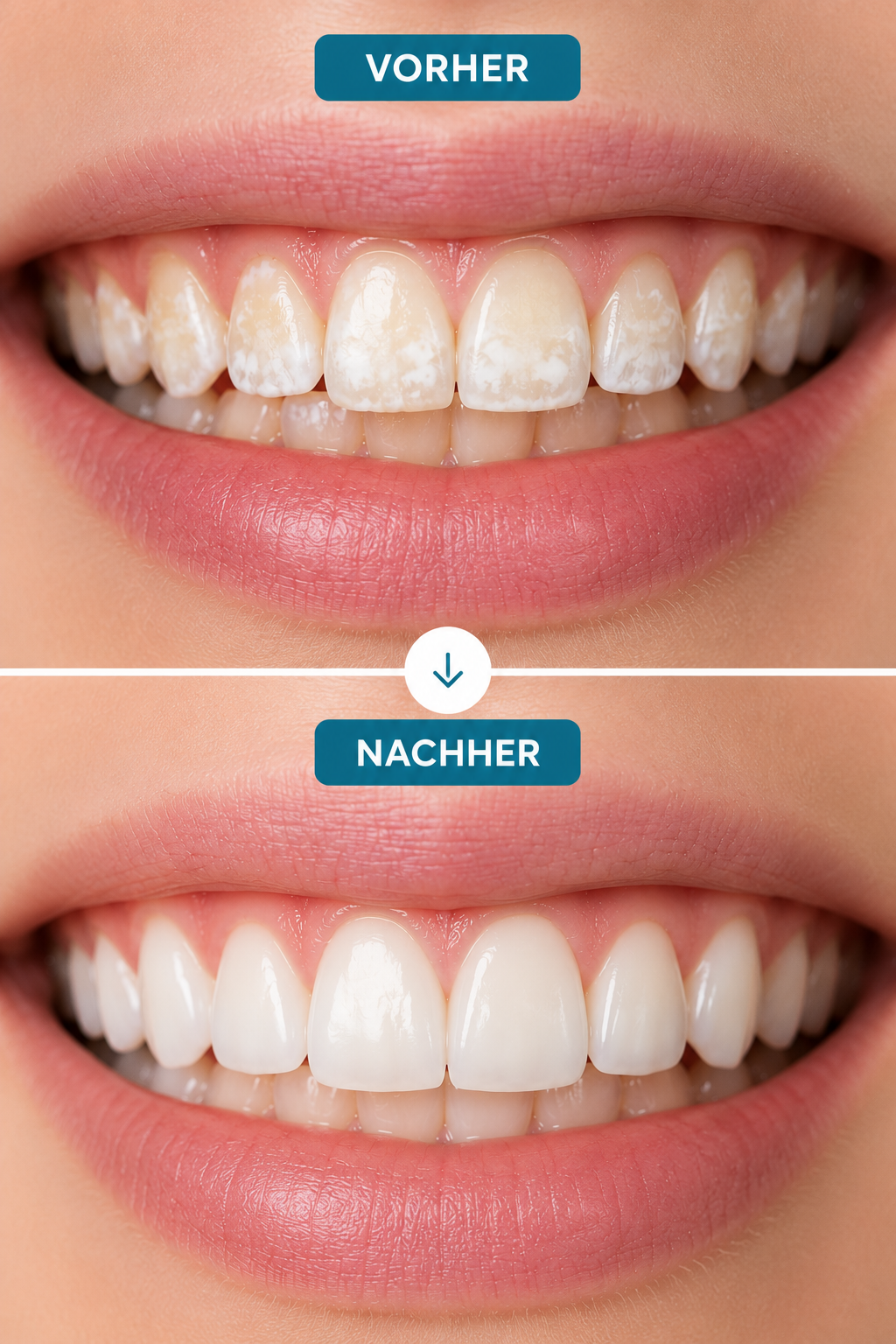
Chalky teeth are not simply normal tooth discolouration. Medically, it is often molar-incisor hypomineralisation, or MIH for short. In this condition, the enamel of certain permanent teeth is not sufficiently mineralised. The first permanent molars are most commonly affected, and sometimes the incisors as well. Affected teeth may show whitish, yellowish or brownish spots, react sensitively, or have a more porous surface.
Especially when incisors are affected, MIH quickly becomes an aesthetic issue as well. The spots can be noticeable when smiling and may bother patients. At the same time, it is important that chalky teeth should not be ground down too quickly or overtreated. The goal is the most tooth-conserving treatment possible.
Diagnosis first, then treatment
Not every light or dark spot on a tooth is automatically a chalky tooth. Similar changes can also be caused by fluorosis, early tooth decay, previous injuries, enamel defects or staining.
That is why, at ZAK, we first carefully assess the underlying cause. We evaluate colour, surface, sensitivity, enamel, caries risk, tooth position, bite and ability to maintain oral hygiene. Only then do we decide which treatment is appropriate.
Icon® infiltration for white spots and enamel opacities
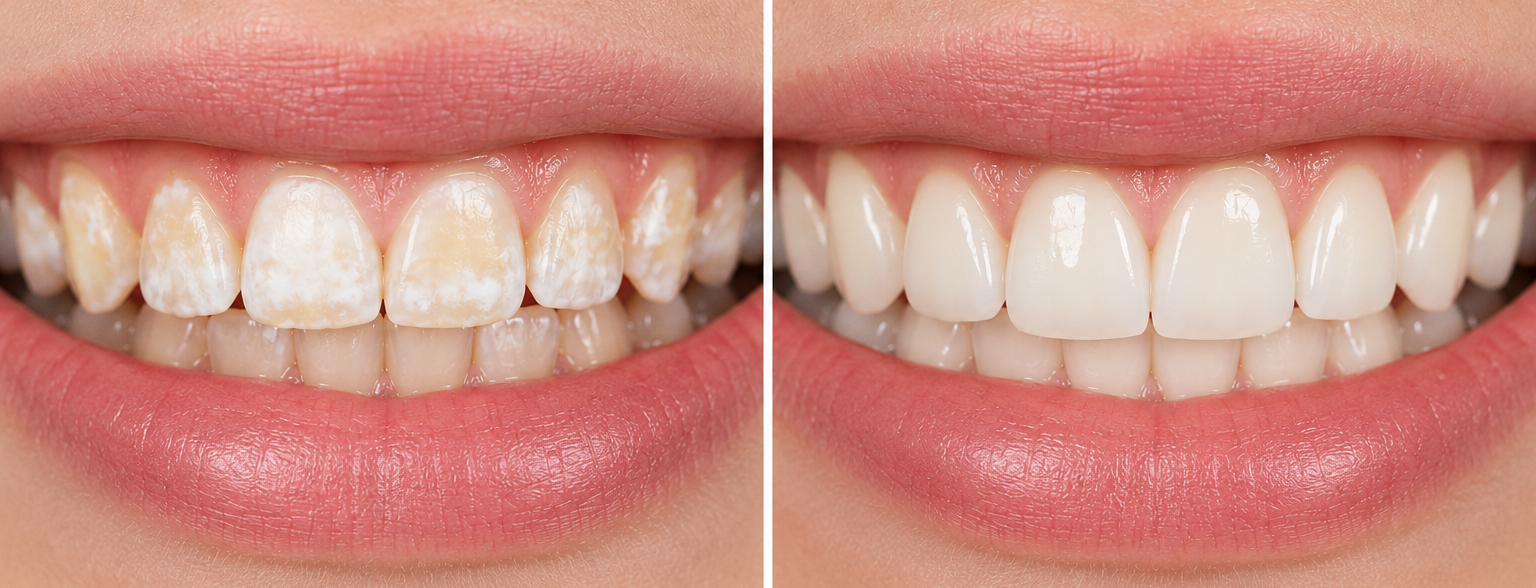
For suitable findings, we use Icon® infiltration. This is a minimally invasive procedure for treating white spots and enamel opacities, for example in cases of MIH, fluorosis, early tooth decay or trauma-related changes. The manufacturer describes Icon® Vestibular as an infiltration treatment for developmental enamel opacities with maximum preservation of healthy tooth structure.
The principle: the porous areas in the enamel are not simply ground down; instead, after appropriate preparation, they are infiltrated with a special resin. This can improve light refraction in the altered enamel, making white or patchy areas appear significantly less noticeable.
Benefit: improved aesthetics without unnecessary grinding
The key advantage of Icon® treatment is its tooth-conserving approach. Especially in the front tooth area, we aim to preserve healthy tooth structure as much as possible. If infiltration is possible, it can be an alternative to more invasive treatments such as larger composite build-ups or veneers.
Digital planning and precise fabrication
With digital impressions, CAD/CAM planning and our in-house laboratory, aesthetic restorations can be planned and monitored in close coordination. This allows shape, colour, proportions and function to be assessed in a targeted way.
Function remains crucial
Even with aesthetic corrections, the bite must be correct. Veneers, composite build-ups or other aesthetic restorations are therefore always planned functionally as well—so they not only look good, but remain stable in the long term.
Veneers are not always the best solution
Not every aesthetic change automatically requires veneers. Sometimes bleaching, a small composite correction, polishing or prior alignment correction with aligners is sufficient. That is why we discuss together which solution achieves the desired effect without unnecessarily removing healthy tooth structure.
Beautiful long term and easy to maintain
After treatment, care, check-ups and good oral hygiene remain important. Veneers and aesthetic restorations should not only look good on day one, but remain stable, easy to clean and harmonious in the long term. Regular check-ups help keep an eye on colour, margins, bite and gums.
Our goal is an aesthetic solution that looks natural, is medically appropriate and suits you in the long term.
Veneers and aesthetic tooth corrections
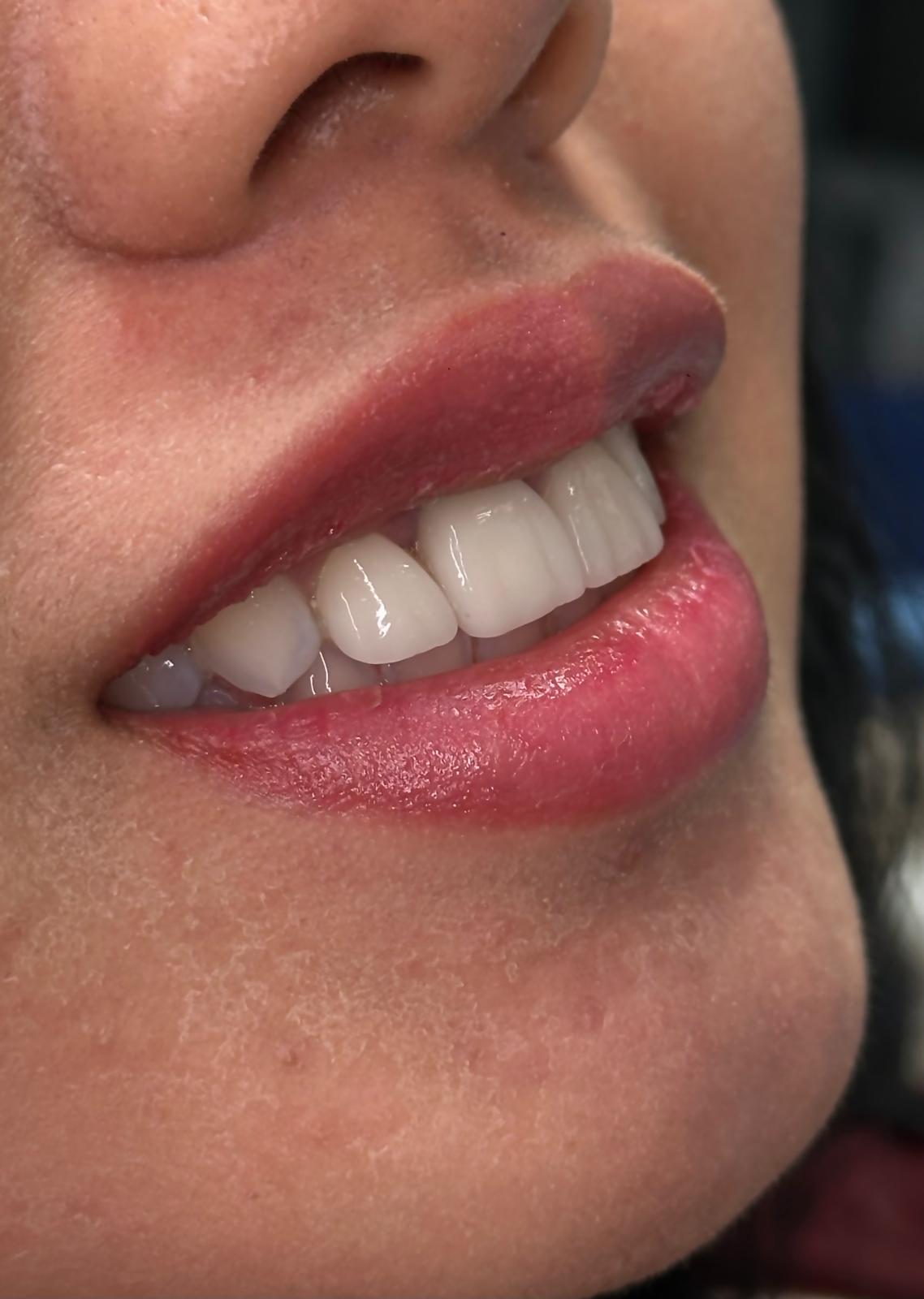
Veneers can be a highly aesthetic solution when the shape, colour, length or minor irregularities of the front teeth need to be corrected. The goal is not an artificial, standardised smile, but a harmonious result that suits your face, lips, tooth shape and personal expression.
Careful planning before treatment
Before providing veneers, we assess tooth structure, bite, tooth position, gums, existing fillings and aesthetic preferences. Not every tooth is automatically suitable for veneers. What matters is whether the restoration can be implemented in a medically appropriate, stable and as tooth-conserving a way as possible.
Tooth-conserving aesthetics
Veneers are planned to preserve as much healthy tooth structure as possible. Depending on the initial situation, smaller composite build-ups, bleaching or prior tooth alignment correction may be more appropriate or additionally necessary.
Natural result
Colour, translucency, shape and surface texture are tailored individually. Especially in the front tooth area, it is important that the restoration does not look artificial, but blends naturally into the smile.
Aligner therapy for discreet tooth corrections
Transparent aligners can discreetly correct mild to moderate tooth misalignment. The trays are removable and easy to integrate into everyday life.
Planning aesthetics and function together
Aligner therapy can be appropriate when tooth positions need to be improved—for example in cases of crowding, gaps, slight rotations, or before an aesthetic restoration with veneers or dental prosthetics.
Thorough assessment beforehand
Before starting, we assess tooth position, bite, gums, bone, existing fillings, crowns and overall oral health. Not every misalignment is suitable for aligners. That is why an honest assessment is important.
Digital planning
Treatment is planned digitally. This makes it possible to show which tooth movements are intended and what result is realistically achievable.
Removable and suitable for everyday life
Aligners can be removed for eating and dental care. However, for the treatment to work, they must be worn consistently.
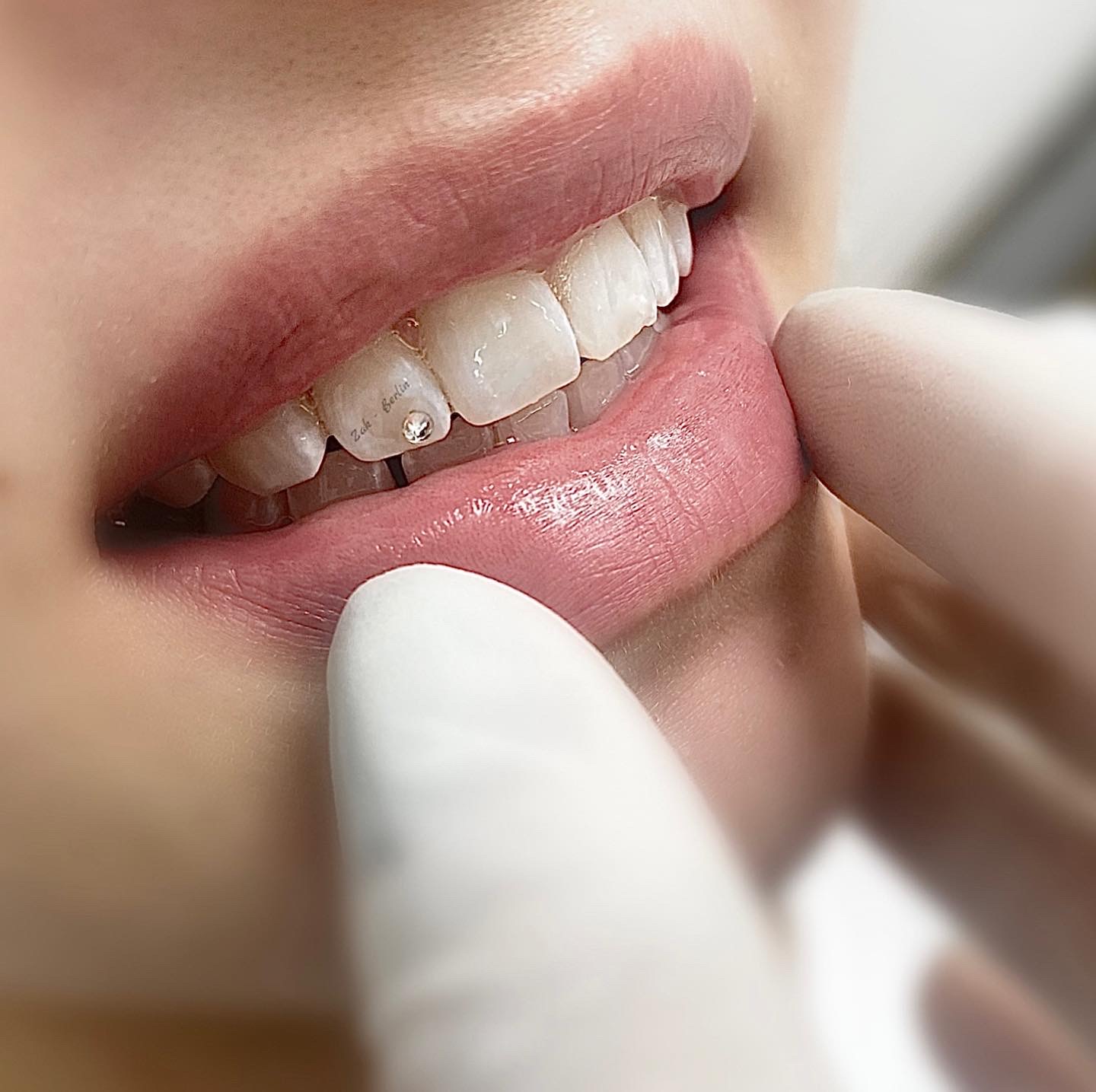
Tooth jewellery securely attached
Tooth jewellery can be a small aesthetic detail that adds a personal touch to your smile. What matters is that it is attached professionally and does not compromise oral health.
Prior check-up
Before placement, we check the tooth surface, enamel, gums and oral hygiene. Tooth jewellery should only be attached to a healthy, clean tooth surface.
Gentle attachment
Depending on the initial situation, tooth jewellery can usually be attached without drilling and without unnecessary grinding of the tooth. Attachment is carried out using dental materials and under controlled conditions.
Hygiene remains important
Even with tooth jewellery, the tooth surface and margins must remain easy to clean. We explain what to pay attention to during care so that no deposits or stains accumulate.
Individual placement
Size, shape and position are discussed together. The goal is a subtle, harmonious accent that suits your smile and does not look artificial.
Removal if required
If tooth jewellery is no longer desired later on, it can be removed under supervision at the practice. The tooth surface is then checked and polished.
Your naturally beautiful smile
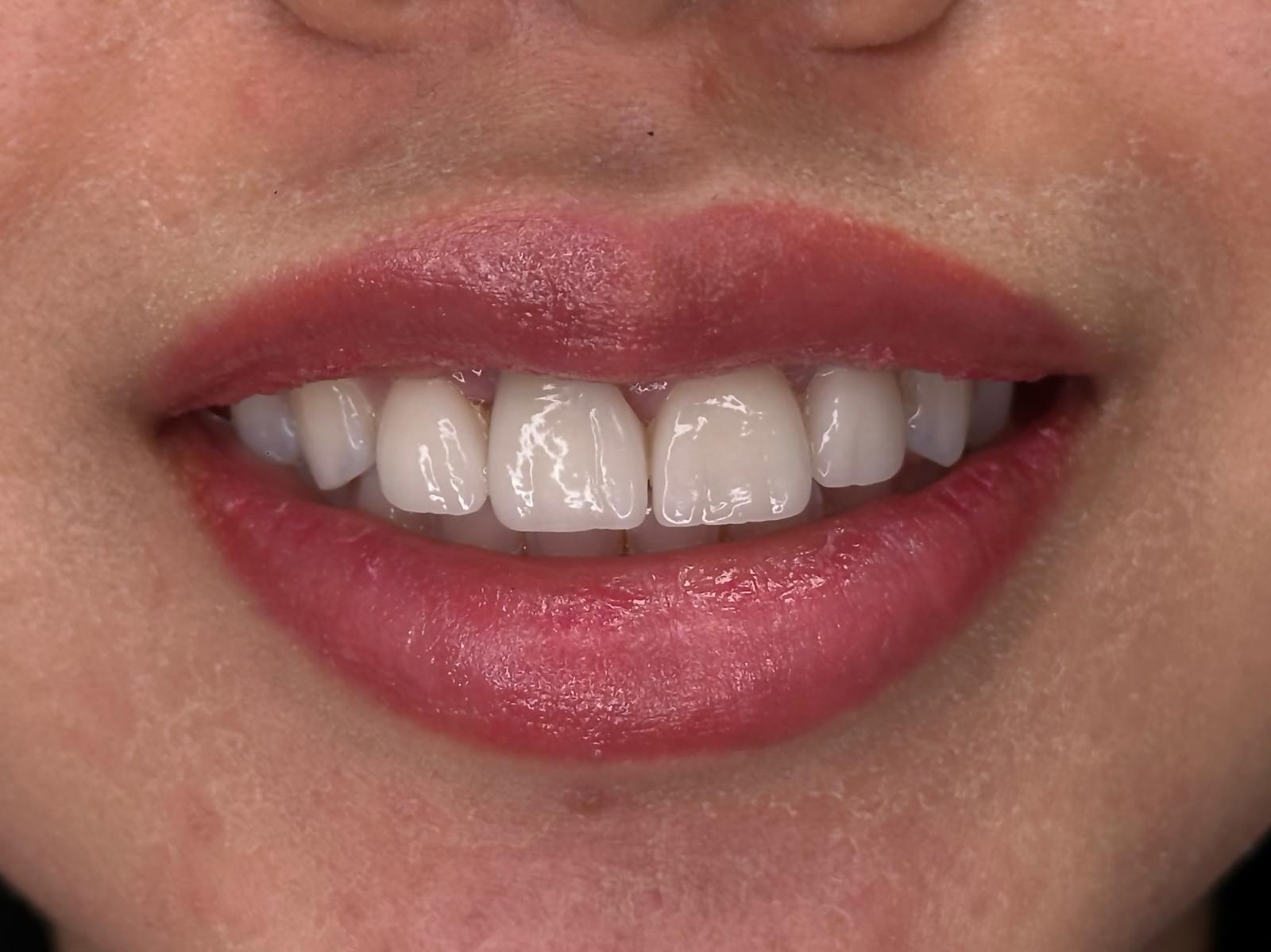
Whether bleaching, veneers, aligner therapy or tooth jewellery—we advise you individually and assess which aesthetic treatment suits your dental situation, your preferences and your natural smile.
Our goal is a result that looks harmonious, is medically appropriate and can be well maintained in the long term.
Aesthetic dentistry