


Tooth Preservation & Endodontics at ZAK in Berlin-Mitte
Preserving healthy natural teeth for as long as possible is a central goal of modern dentistry. At ZAK, we therefore carefully evaluate which treatment is medically appropriate and how to preserve as much healthy tooth structure as possible.
This includes early treatment of caries, high-quality fillings, tooth-conserving inlays, onlays and partial crowns, as well as modern root canal treatments. Not every damaged tooth needs to be immediately crowned, replaced or extracted.
Tooth Preservation Before Replacement
At ZAK, we first evaluate whether a tooth can be preserved. The deciding factors are how much healthy tooth structure remains, whether the tooth can be stably restored, and which treatment makes sense long-term.
Caries Treatment
Caries is detected as early as possible and treated in a targeted manner. Depending on the extent, high-quality fillings, inlays or partial crowns may be appropriate. The goal is to remove diseased tooth structure while preserving as much healthy tooth structure as possible.
Root Canal Treatment
If the dental nerve is inflamed or necrotic, root canal treatment can help preserve the tooth. Inflamed tissue and bacteria are removed from the root canal system, the tooth is disinfected, and then sealed securely.
Long-Term Stability
Tooth preservation does not end with a single treatment. What matters are monitoring, good oral hygiene, stable filling or ceramic margins, a healthy periodontal apparatus, and regular follow-up care.
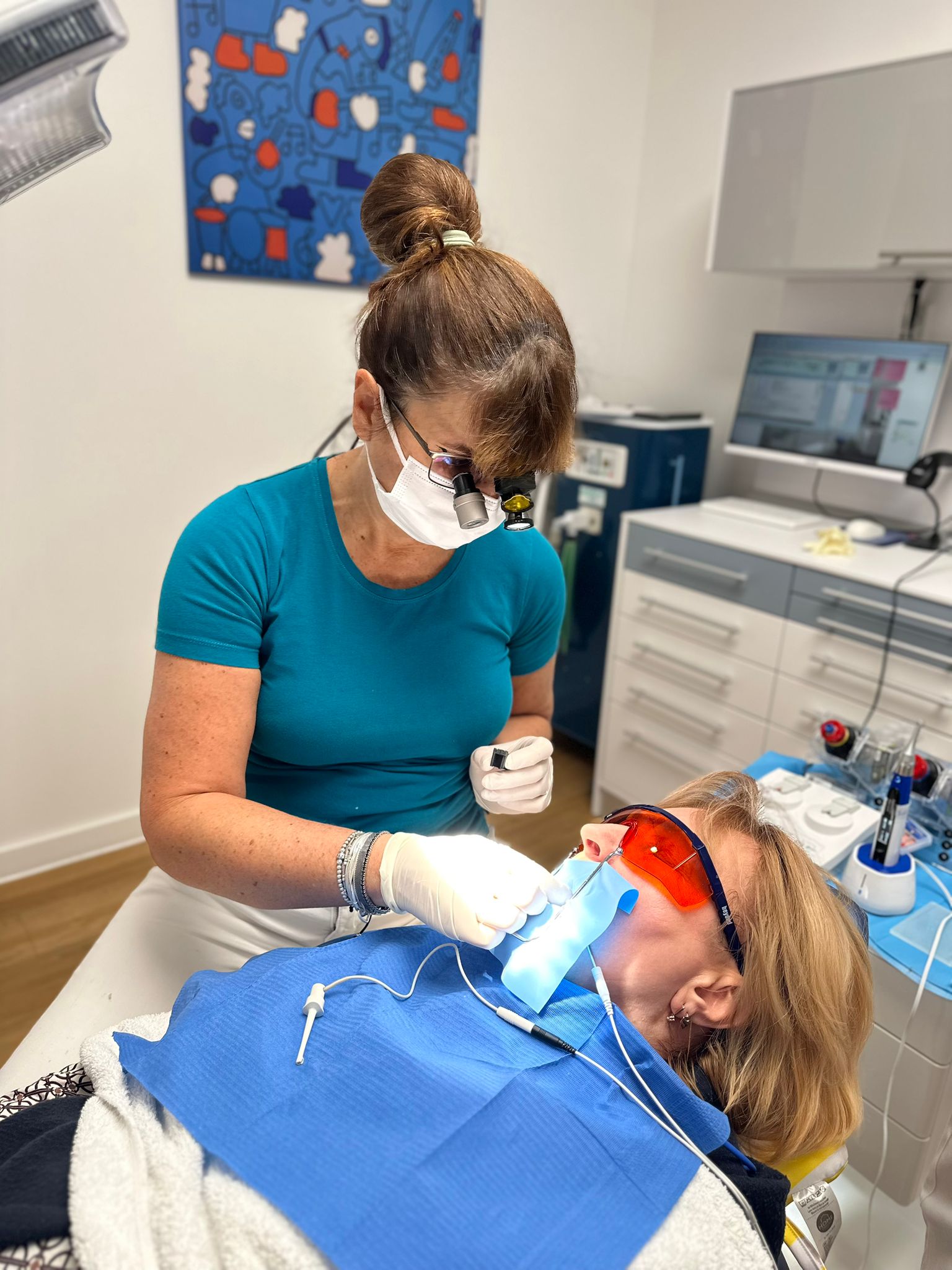
- modern diagnostics with digital radiography
- digital volume tomography available for complex findings
- treatment exclusively under rubber dam
- electronic length measurement of root canals
- mechanical preparation with modern instruments
- thorough irrigation and disinfection
- secure sealing of the canal system
- stable restoration after treatment
- Goal: preservation of the natural tooth when medically appropriate
Modern Root Canal Treatment
When the dental nerve is inflamed or already necrotic, a tooth does not automatically need to be extracted. Modern root canal treatment can help preserve the natural tooth and avoid later extraction.
At ZAK, we follow a clearly structured endodontic approach for root canal treatments. Each step has a purpose: identify the cause of inflammation, clean the root canal system as thoroughly as possible, reduce bacteria, seal the tooth securely, and then restore it stably.
Modern Diagnostics Before Treatment
It begins with careful diagnostics. We evaluate symptoms, sensitivity, pain on biting, existing fillings or crowns, gingival condition, and the tooth's load-bearing capacity. Digital radiographs help assess roots, bone, signs of inflammation, and previous treatments more accurately.
For complex findings, digital volume tomography may be additionally appropriate. This allows a more precise assessment of the three-dimensional situation—for example, in cases of unclear inflammation, unusual root anatomy, previously treated teeth, or suspected additional canals.
The advantage for patients: treatment is not started "blindly," but planned based on the most accurate possible diagnostic assessment.
Treatment Exclusively Under Rubber Dam
We perform root canal treatments exclusively under rubber dam. The tooth being treated is isolated from the rest of the oral cavity using a special rubber sheet.
This has several advantages: the tooth remains dry, saliva and bacteria do not enter the root canal system uncontrollably, and the treatment field is better protected. At the same time, patients are protected from irrigation solutions and small instruments.
Especially during root canal treatment, this isolation is important because the goal of treatment is the most thorough possible cleaning and disinfection of the canal system. If saliva and bacteria constantly enter during treatment, this goal becomes more difficult to achieve.
Precise Access to the Root Canal System
After isolation, the tooth is opened and access to the root canals is created. This is not just about "getting into the tooth," but about exposing the canal orifices in a controlled manner while working as conservatively as possible.
Old fillings, carious areas, or leaking restorations must be removed or assessed depending on the findings, so that the canal system can be reached cleanly. At the same time, care is taken to preserve as much healthy tooth structure as possible.
Electronic Length Measurement
A critical step is determining the working length. This means: how long is each root canal, and to what point must it be cleaned, prepared, and later filled?
At ZAK, we use electronic length measurement for this purpose. It helps determine the length of root canals precisely and perform treatment in a controlled manner.
The advantage: if the working length is too short, inflamed or bacteria-laden areas may remain in the canal. If it is too long, surrounding tissue may be unnecessarily irritated. Length measurement therefore supports more precise, gentler, and better-documented treatment.
Depending on the situation, electronic measurement is combined with digital radiographic diagnostics to additionally verify working length and document the treatment process comprehensibly.
Mechanical Preparation
After length determination, the root canals are mechanically prepared. Modern endodontic instruments are used to clean the canal system in a controlled manner and prepare it for disinfection.
The advantage of mechanical preparation lies in the uniform, precise, and reproducible shaping of the canals. Even curved or difficult-to-access root canals can be treated more systematically.
The goal is not to remove as much tooth structure as possible, but to prepare the canal system so that irrigation solutions and disinfection can work as effectively as possible.
Thorough Irrigation and Disinfection
Mechanical preparation alone is not sufficient. Therefore, irrigation of the root canal system is a central component of treatment. Suitable irrigation solutions remove tissue remnants, bacteria, and deposits from the canals.
Precisely because root canals can be very finely branched, disinfection is especially important. The goal is to reduce bacterial load as much as possible and create a stable foundation for subsequent sealing.
Secure Sealing of the Canal System
After cleaning, preparation, and disinfection, the root canal system is sealed securely. A secure seal is important so that bacteria cannot re-enter the cleaned canals.
The subsequent restoration of the tooth also plays a major role. Depending on the loss of structure, a filling, inlay, partial crown, or crown may be necessary to stabilize the tooth permanently.
Tooth Preservation Requires Follow-Up Care
After root canal treatment, we monitor the further course. What matters are freedom from symptoms, stable sealing, good load-bearing capacity, and a restoration that protects the tooth long-term.
Stable Restoration After Root Canal Treatment
With the root filling, treatment is not yet fully complete. A root-treated tooth subsequently requires a secure and load-bearing restoration so that bacteria cannot re-enter the canal system and the tooth is protected during chewing.
Depending on the loss of structure, a high-quality core build-up may be sufficient. However, if larger portions of tooth structure are missing or the tooth is weakened by caries, old fillings, or fractures, a partial crown or crown may be appropriate. The goal is always a restoration that protects the tooth as conservatively as possible, yet permanently and stably.
Detect Periodontitis Early and Provide Long-Term Care
Periodontitis is a chronic inflammation of the periodontal apparatus. It affects not only the gums but also the structures that hold the tooth in the bone. Untreated, periodontitis can lead to tooth mobility, bone loss, and tooth loss.
At ZAK, we therefore watch for early signs such as gingival bleeding, periodontal pockets, gingival recession, bad breath, tooth mobility, or changes in the bite. The earlier risks are detected, the better tooth preservation can be supported.
Digital Periodontal Diagnostics
For recording gingival and periodontal status, we use the digital pa-on periodontal probe at ZAK. This allows pocket depths, gingival recession, and other periodontal findings to be measured systematically and documented digitally.
An important advantage is the pressure-controlled measurement process. Measurement is performed with standardized probing force and is therefore more comparable. For many patients, this form of measurement is more comfortable than traditional manual probing, especially with sensitive or inflamed gums.
Structured Assessment
We assess gums, pocket depths, bleeding tendency, deposits, bone contour, and individual risk factors. The digitally documented values help record the baseline findings and better compare subsequent follow-up examinations.
Periodontitis Therapy
In existing periodontitis, bacterial deposits above and below the gingival margin are removed in a targeted manner. Ultrasonic instruments can remove hard deposits and calculus precisely. Fine hand instruments help refine root surfaces and difficult-to-access areas in a controlled manner. Air polishing can be used additionally to remove soft biofilm particularly gently. The goal is to reduce inflammation, stabilize periodontal pockets, and protect the periodontal apparatus long-term.
Laser Therapy
In certain inflammatory situations, antimicrobial photodynamic therapy can be used additionally. The goal is targeted reduction of pathogens and support of a more stable microbial balance—for example, in periodontitis, peri-implantitis, or as part of tooth-preserving treatments.
Individual Intervals
How frequently examinations and professional cleanings are appropriate depends on personal risk: oral hygiene, pocket depths, bleeding tendency, smoking, systemic diseases, implants, and existing restorations are all considered.
Monitoring Over Time, Not Just Snapshots
Periodontitis is not a one-time disease that is simply concluded after treatment. What matters is long-term stabilization. Through regular examinations and digitally documented findings, changes can be detected early and treated in a targeted manner.
Tooth Preservation as the Focus
Our goal is to control inflammation, avoid tooth loss as much as possible, and maintain natural teeth stably over the long term.
Fillings, Inlays, and Partial Crowns
Conservative Restoration Instead of Unnecessary Crowning
Not every damaged tooth immediately needs a crown. At ZAK, we carefully evaluate how much healthy tooth structure can be preserved and which restoration suits the size of the defect, the load, the bite, and long-term stability.
Our principle is: as small as possible, as stable as necessary. A restoration should protect the tooth, restore function, and at the same time preserve as much natural tooth structure as possible.
Detect Caries Early and Treat Precisely
Caries often begins small and does not always cause immediate symptoms. That is why regular examinations are important. The earlier a defect is detected, the more conservatively it can usually be treated.
During caries treatment, we remove diseased tooth structure in a targeted manner and try to preserve healthy structures as much as possible. Afterward, we decide whether a direct filling is sufficient or whether a more stable restoration such as an inlay, onlay, or partial crown is more appropriate.
Fillings for Smaller Defects
Smaller defects can often be restored with high-quality filling materials. The goal is a secure, stable, and as natural as possible reconstruction of tooth form.
We pay attention to marginal seal, contact points, bite, form, and cleanability. A filling should not just close a hole, but restore the tooth functionally.
Inlays and Partial Crowns for Larger Defects
When a defect is larger or more heavily loaded areas are affected, inlays or onlays may be appropriate. These restorations are fabricated precisely outside the mouth and then permanently cemented.
The advantage: form, contact points, bite, and material thickness can be planned very precisely. Especially for larger posterior defects, this can be a more stable and longer-lasting solution than a simple direct filling.
Partial Crowns Instead of Full Crowns
When cusps or larger portions of a tooth are weakened but sufficient healthy tooth structure remains, a partial crown may be appropriate. It stabilizes the tooth in a targeted manner without unnecessarily preparing it completely.
Thus, a partial crown can be a good intermediate solution: stronger than a filling, but more conservative than a full crown.
Digital Planning and Precise Fabrication
At ZAK, many inlays, onlays, and partial crowns can be planned digitally. With an intraoral scanner, CAD/CAM planning, and an in-house laboratory, form, material, bite, and fit can be coordinated directly.
This keeps diagnostics, planning, fabrication, and dental supervision closely connected. This is especially important when a restoration must fit precisely, look natural, and be well maintained long-term.
Material Appropriate to the Situation
Depending on the findings, different materials may be appropriate. For esthetically demanding or more heavily loaded restorations, ceramic materials may be appropriate. For smaller defects, high-quality filling materials may be sufficient.
Material selection is based not only on esthetics but also on load, remaining tooth structure, bite situation, cleanability, and long-term stability.
Goal: Preserve the Natural Tooth Stably
Fillings, inlays, onlays, and partial crowns are important components of tooth preservation. They help rebuild damaged teeth without prematurely removing more tooth structure than necessary.
Our goal is a restoration that protects the natural tooth, preserves as much healthy tooth structure as possible, and is functionally and esthetically convincing long-term.
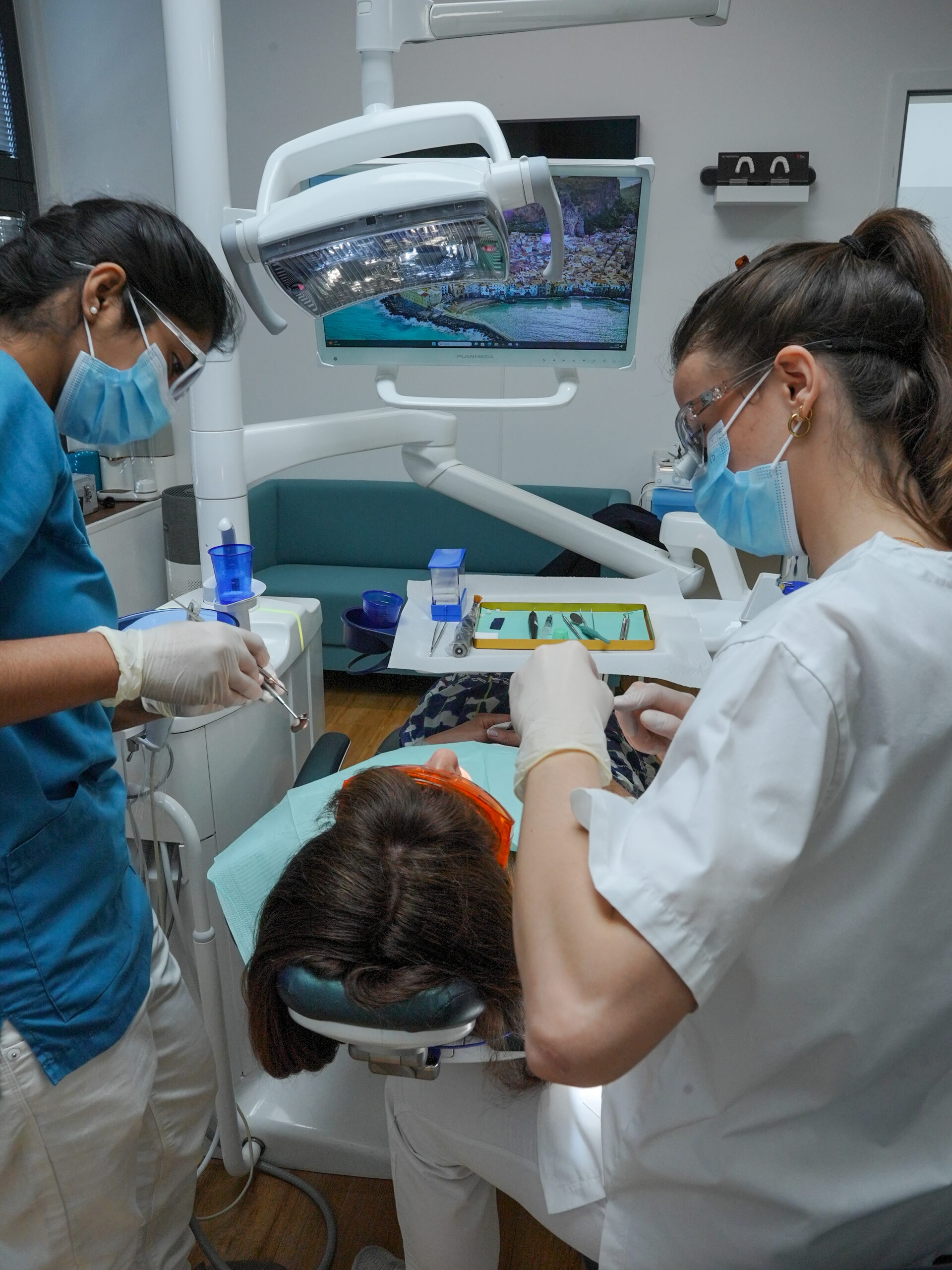
Inlays and Onlays at ZAK at a Glance
- Digital Impression Instead of Traditional Impression Material The dental situation is captured digitally with the intraoral scanner. This allows precise planning of form, bite, contact points, and marginal areas.
- CAD/CAM Planning in the Practice The restoration is digitally designed. We consider tooth form, material thickness, occlusal surfaces, contact points, and bite.
- Fabrication in Our Own Laboratory Inlays and onlays can be fabricated in the in-house CAD/CAM laboratory. This keeps scanning, planning, fabrication, inspection, and cementation closely connected.
- High-Quality Glass-Ceramic We prefer to use lithium disilicate glass-ceramic when it suits the findings. The material is tooth-colored, biocompatible, dimensionally stable, and esthetically very high-quality.
- Durable and Conservative For larger defects, a ceramic inlay or onlay can be more appropriate long-term than a large direct filling. It stabilizes the tooth in a targeted manner and can help avoid repeated filling replacements with further loss of structure.
- More Stable Than Large Fillings Large fillings can reach their limits more quickly under chewing load. Ceramic inlays and onlays are fabricated precisely outside the mouth and then permanently cemented.
- Esthetically Natural Color, form, and light transmission can be coordinated so that the restoration integrates harmoniously into the natural dental situation.
Long-Term Tooth Preservation Requires Monitoring
Tooth preservation does not end with a single treatment. Whether filling, inlay, partial crown, or root canal treatment, what matters is that the restoration remains stable long-term, can be cleaned well, and is monitored regularly.
Regular Monitoring Instead of Late Intervention
Many problems do not arise suddenly. Leaking filling margins, small marginal gaps, incipient caries, overloading, or changes in the gums often develop gradually. Through regular examinations, such changes can be detected earlier and treated more precisely.
The earlier a problem is discovered, the smaller and more conservative the treatment can often remain.
Monitoring After Root Canal Treatment
After root canal treatment, follow-up care is especially important. We monitor whether the tooth remains symptom-free, whether inflammation in the bone resolves, and whether the tooth is permanently and stably restored.
Successful root canal treatment requires not only thorough cleaning and filling of the canal system but also a secure and load-bearing restoration of the tooth. Therefore, after treatment, we evaluate whether a filling is sufficient or whether an inlay, onlay, partial crown, or crown is appropriate.
Protection Against Recurrent Damage
Even after high-quality restoration, new stresses can arise. Grinding, clenching, high chewing load, unfavorable contact points, or inadequate cleaning can stress fillings, ceramic restorations, or root-treated teeth.
Therefore, during examinations, we evaluate not only the individual tooth but also bite, contact points, restorations, gums, and cleanability. If necessary, protective measures such as splint therapy may be appropriate.
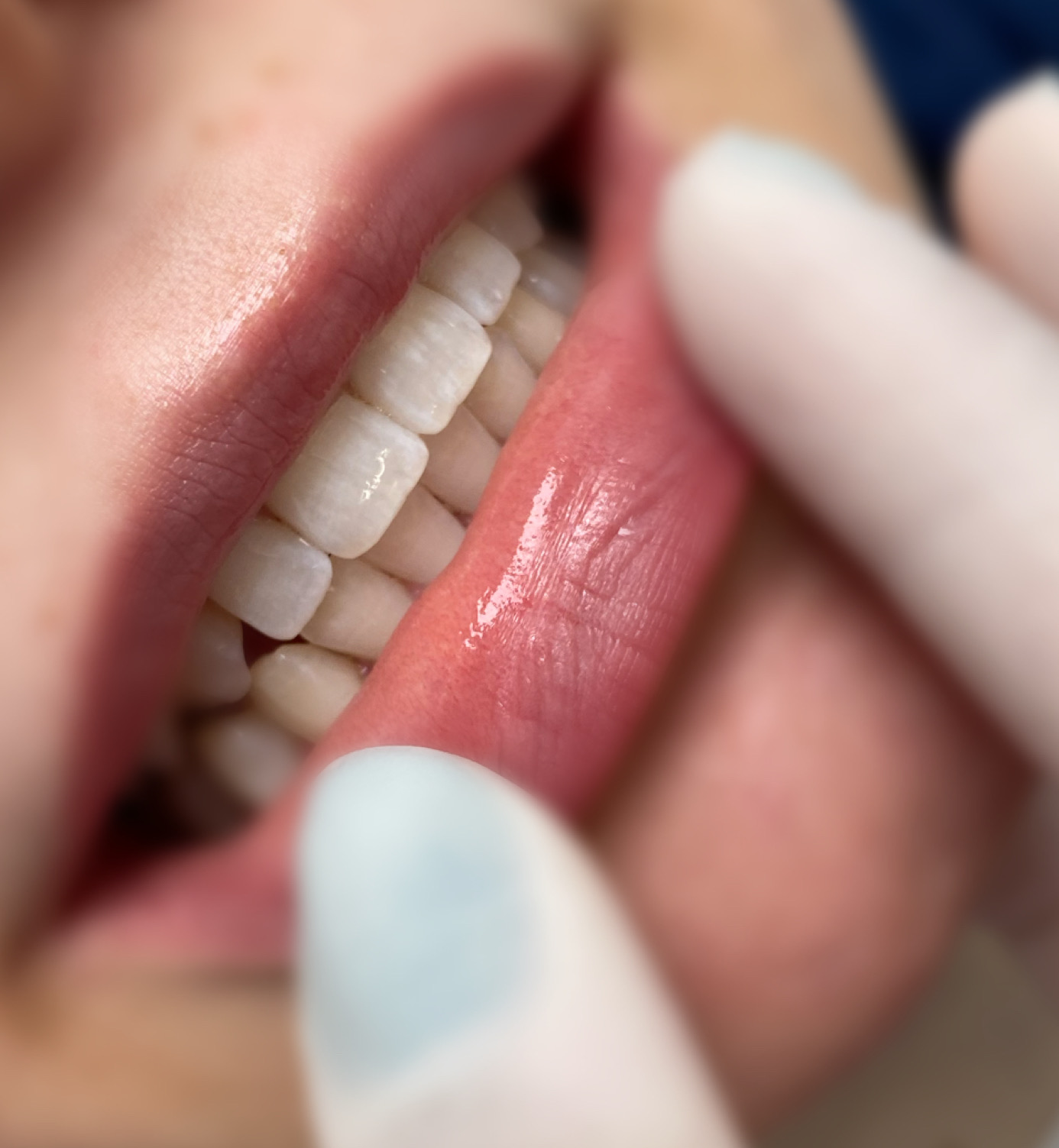
Preserve Natural Teeth Long-Term
Whether caries treatment or root canal treatment, preserving natural teeth is the focus. We evaluate your individual situation, provide clear guidance, and plan the next steps as conservatively and long-term appropriately as possible.
Through regular examinations, professional prophylaxis, and early treatment, many major interventions can be avoided or at least significantly delayed. Small changes in teeth, gums, or existing restorations can thus be detected in time and treated in a targeted manner.
Tooth preservation is also important esthetically: Natural teeth shape the form, color, bite, and expression of the smile. When a tooth can be preserved, natural esthetics can often be better maintained as well.
Prophylaxis & Tooth Preservation